
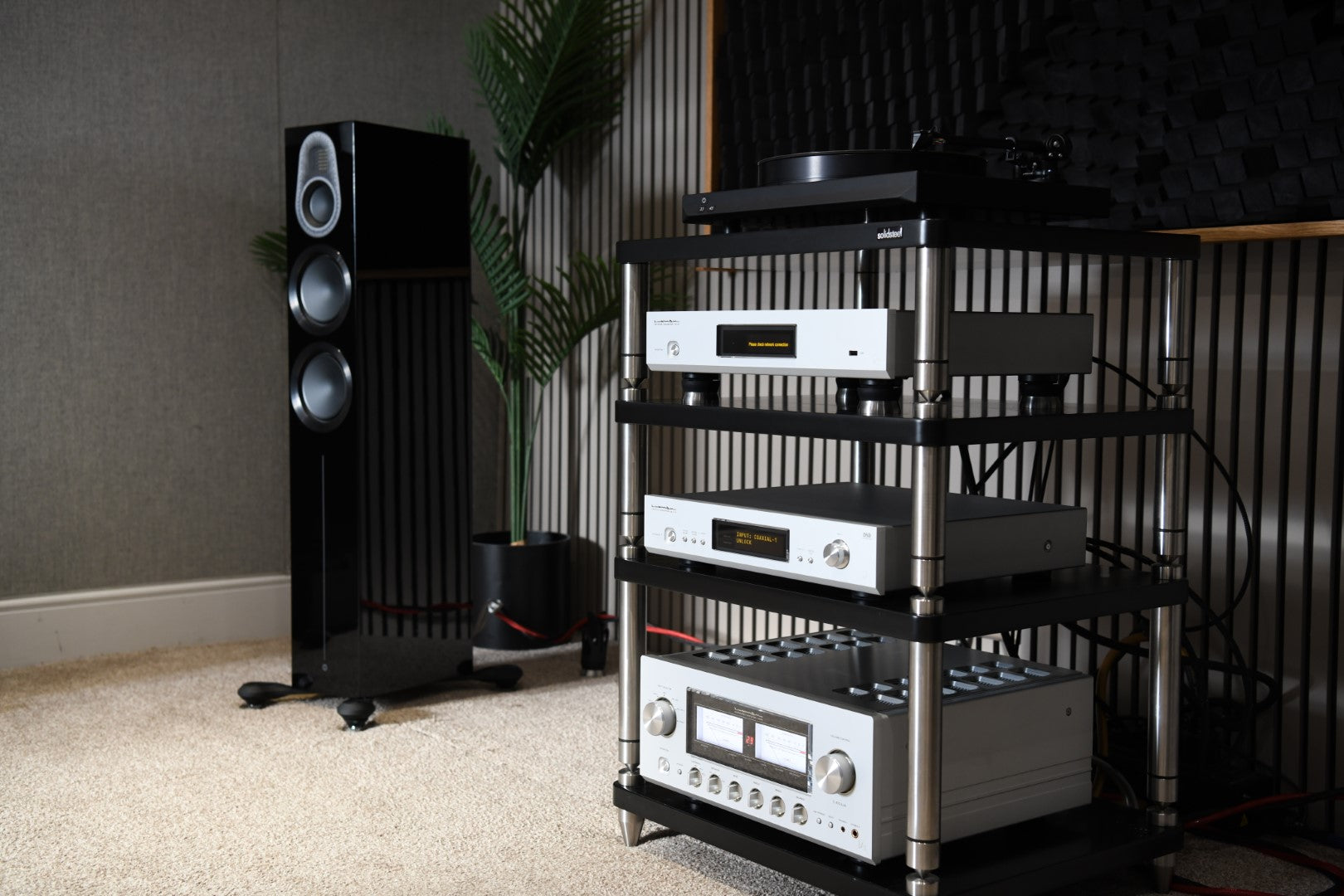
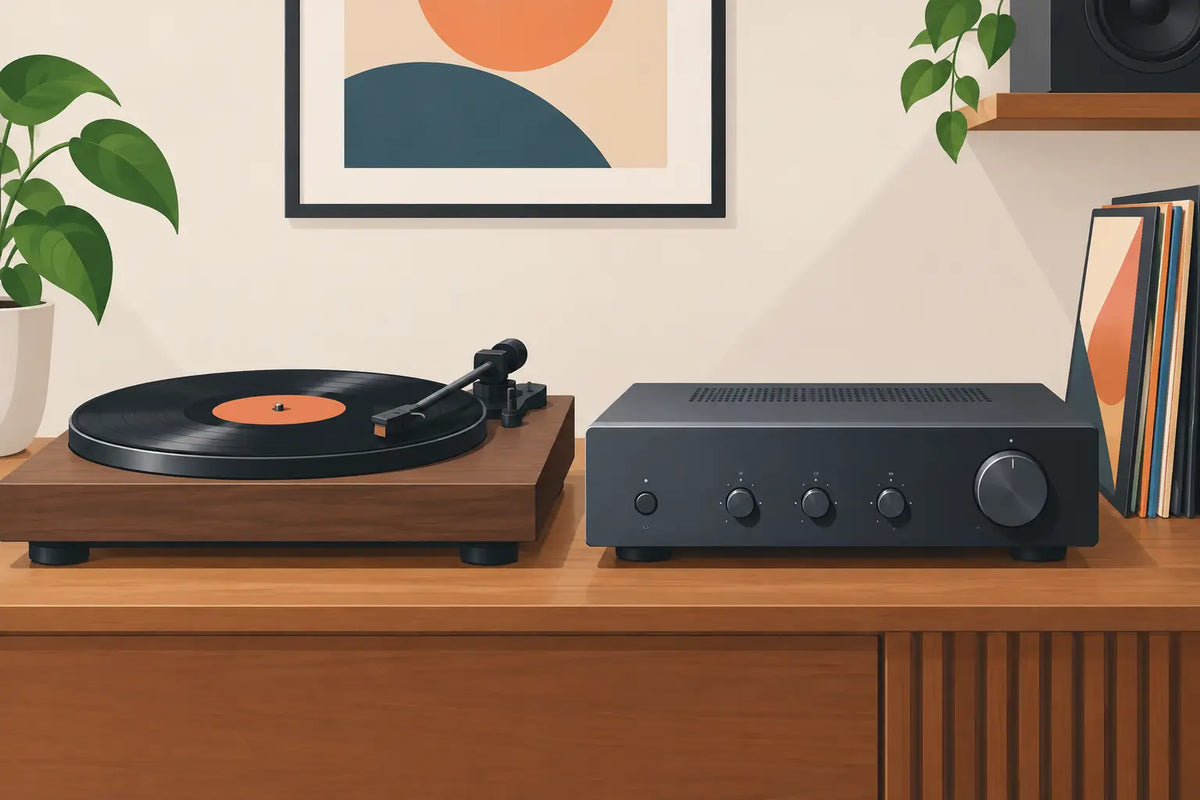
A record can sound beautifully present one moment, then oddly flat or noisy the next, even on the same turntable. Very often, the missing piece is not the deck at all. The best amplifier for vinyl is the one that correctly handles your cartridge, has the grip to control your loudspeakers and lets the character of your records come through without adding unwanted hardness, hiss or clutter.
That answer is more useful than a single product name because vinyl systems are deeply interdependent. A fine moving-coil cartridge into the wrong phono input will not show its capability. A powerful amplifier partnered with insensitive speakers in a demanding room may still sound constrained. Get the combination right, however, and familiar pressings gain body, space and the sort of rhythmic ease that keeps you listening long after the original plan was to play one side.
What makes the best amplifier for vinyl?
For most listeners, an integrated amplifier is the natural starting point. It combines pre-amplification, power amplification and often a phono stage in one well-engineered chassis. It keeps the system elegant, reduces cable clutter and can deliver genuinely superb analogue performance. Brands such as Luxman, Roksan and Lyngdorf approach the task differently, but the principle is the same: control the loudspeakers properly while preserving the small musical signals coming from the turntable.
The first question is whether the amplifier has a phono stage. A turntable cannot normally be connected to a standard line-level input such as AUX, CD or streamer. Its cartridge produces a very low-level signal that must be amplified and equalised according to the RIAA curve before it reaches the main amplifier section. This job is handled by a phono stage, either built into the amplifier, inside the turntable, or housed in a separate box.
A built-in phono stage can be a very satisfying solution, particularly with a moving-magnet cartridge and a sensibly matched turntable. It offers simplicity without treating vinyl as an afterthought. At higher system levels, a separate phono stage often gives more flexibility, lower noise and a clearer upgrade path. Neither route is automatically superior. A thoughtfully designed onboard stage can outperform a cheap external alternative, while a high-quality standalone phono stage can reveal just how much information a capable cartridge is retrieving.
Match the phono stage to your cartridge
Moving-magnet, or MM, cartridges are the most common fit for entry and mid-level turntables. They usually need around 40dB of gain and a 47k ohm input load. Many integrated amplifiers with a phono input are designed around this standard, making MM a straightforward and excellent-sounding choice.
Moving-coil cartridges, known as MC designs, tend to offer lower moving mass and can retrieve exceptional fine detail, delicacy and image depth. They also produce substantially less output. If your turntable uses an MC cartridge, check that the amplifier's phono stage specifically supports MC operation. Better still, look for adjustable gain and loading, allowing the phono stage to be tailored to the cartridge rather than forcing the cartridge to work around a fixed setting.
This is not specification chasing for its own sake. Insufficient gain can make music sound quiet and lifeless; excessive gain can bring audible noise and restrict headroom. Incorrect loading may affect tonal balance and the sense of openness. A good dealer can establish the cartridge model, its output and recommended loading before suggesting an appropriate amplifier or phono stage.
When an external phono stage is worth it
Consider a separate phono stage when the turntable and cartridge are already serious components, when you intend to move to MC, or when you want to fine-tune the analogue side of the system. It also makes sense if you enjoy comparing pressings and extracting the last degree of texture from acoustic instruments, voices and well-recorded live albums.
There is a practical benefit too. An external unit can sit away from the amplifier's mains transformer and digital circuitry, potentially reducing interference. Placement, earthing and cable routing still matter, so this is not a magic box. But in a revealing system, it can be a decisive upgrade.
Power matters, but control matters more
It is tempting to choose by watts alone. Power is relevant, especially with larger rooms, floorstanding speakers or music played at realistic levels, but it tells only part of the story. Current delivery, power-supply design and an amplifier's ability to remain composed into changing speaker loads have just as much effect on what you hear.
A well-matched 50-watt amplifier can sound more authoritative than a poorly matched 100-watt model. The useful signs are confident bass lines, stable stereo imaging and no sense that the soundstage collapses when a recording gets busy. With vinyl, this grip also helps the system distinguish the weight of a kick drum or double bass from the low-frequency rumble that can travel through a turntable support.
Speaker sensitivity and impedance should guide the choice. Compact standmount speakers in a modest lounge may thrive with a refined lower-powered integrated amplifier. Less sensitive loudspeakers, open-plan spaces and larger floorstanders often benefit from greater reserves. Do not assume louder is better. The aim is effortless scale at the listening levels you actually enjoy.
Choose an amplifier that suits how you listen
A vinyl-first system need not be a vinyl-only system. Many owners want a streamer, television, CD transport or headphones in the same setup. The best amplifier for vinyl should make those daily habits easy without compromising the analogue input.
If streaming is important, decide whether you prefer an analogue integrated amplifier partnered with a dedicated streamer, or an amplifier with digital inputs and streaming capability built in. The separate approach can offer greater freedom to upgrade individual elements. An all-in-one design can be wonderfully tidy and simple for family use. For television, look for HDMI ARC if you want the TV remote to control everyday volume, or use an optical connection where that is sufficient.
Also consider the physical details. A proper volume control, clear input selection, a remote you will actually use and sensible spacing around the amplifier all make ownership more enjoyable. Premium hi-fi should feel inviting on a Tuesday evening, not like a project that requires preparation every time you want to play a record.
Do not let the room undermine the system
Vinyl replay is unusually sensitive to placement. Keep the turntable away from the loudspeakers where possible, particularly from the same furniture or shelving unit. Vibration can feed back into the cartridge, softening bass and creating a thick, indistinct sound at higher volumes. A rigid rack, suitable wall shelf or carefully chosen isolation solution can make a larger difference than expected.
The room itself has a voice. Hard floors, bare glass and large open spaces can make upper frequencies feel sharper, while corners can exaggerate bass. Before changing equipment, experiment with speaker position and listening distance. Moving speakers slightly farther from rear walls, adjusting toe-in and ensuring the turntable is level are simple steps with serious sonic consequences.
For more ambitious installations, acoustic treatment and calibration can bring order without making a living room feel like a studio. The goal is not to remove character from the room. It is to hear more of the recording and less of the room's interference.
Audition with records you know intimately
Specifications narrow the field, but they cannot tell you whether an amplifier will make your collection feel alive. Bring a few familiar records to an audition: a sparse vocal recording, something with strong bass, a dense rock or electronic mix, and an album you simply love. Listen for the natural rise and fall of a singer's phrasing, the decay of cymbals, the placement of instruments and whether bass has shape rather than just volume.
Avoid judging in the first ten seconds alone. The best partnerships tend to become more convincing as the side progresses. You should not feel pushed towards a particular frequency range or impressed only by exaggerated detail. You should feel drawn into the performance.
At Yorkshire AV, a proper demonstration can compare amplifier and phono-stage options with appropriately matched turntables and loudspeakers in a real listening room. Fancy a demo? No problem. Hearing the alternatives is far more valuable than trying to decode every specification in isolation.
The right amplifier will not merely make your records louder. It will make the quiet passages more believable, the crescendos less strained and the ritual of lowering the stylus feel worth repeating. Start with your cartridge, speakers, room and listening habits, then trust your ears with music you know by heart.


Share:
How to Choose Hi-Fi Speakers for Your Room
Turntable Cartridge Upgrade Guide for Better Sound