
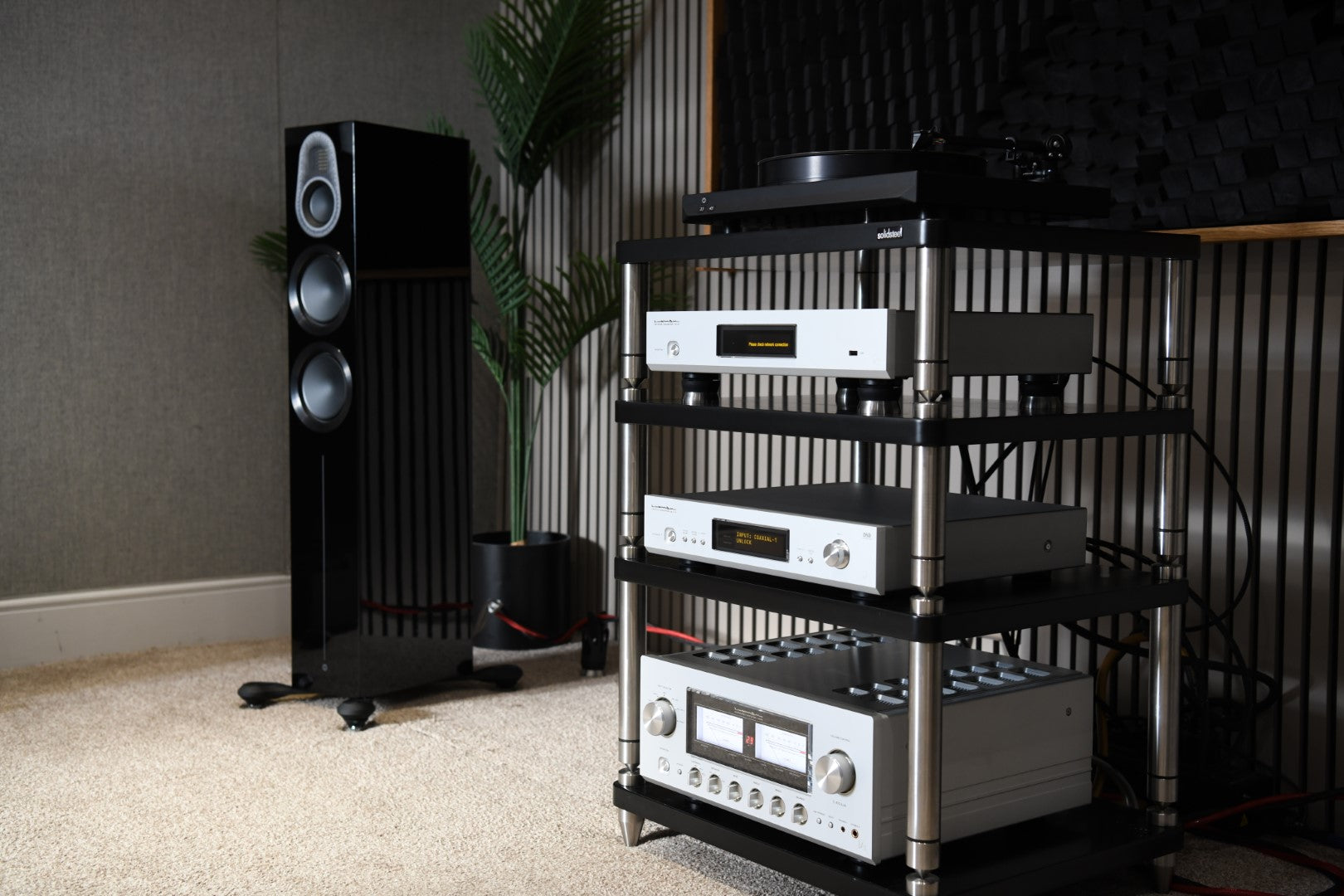
A great film can survive a modest screen. It cannot survive dialogue you cannot follow, bass that swamps the room, or a picture fighting reflections from the window. The best home cinemas are not simply collections of expensive boxes. They are carefully considered rooms where sound, image, seating and everyday usability work together to make you forget the equipment is there.
That distinction matters whether you are converting a spare bedroom, planning an extension or giving a family room a serious upgrade. A properly designed system makes a whispered line clear at low volume, lets a soundtrack build without harshness, and gives every seat a convincing sense of scale. It should feel thrilling on a Saturday night, then be straightforward enough for everyone in the house to use on a Tuesday.
Start With the Room, Not the Specification
The room has more influence on a cinema system than most people expect. Its dimensions, construction, windows, doors and furnishings all affect what you hear and see. A superb projector will struggle in a bright room with pale reflective walls; equally, premium loudspeakers can sound unsettled when placed wherever space happens to allow.
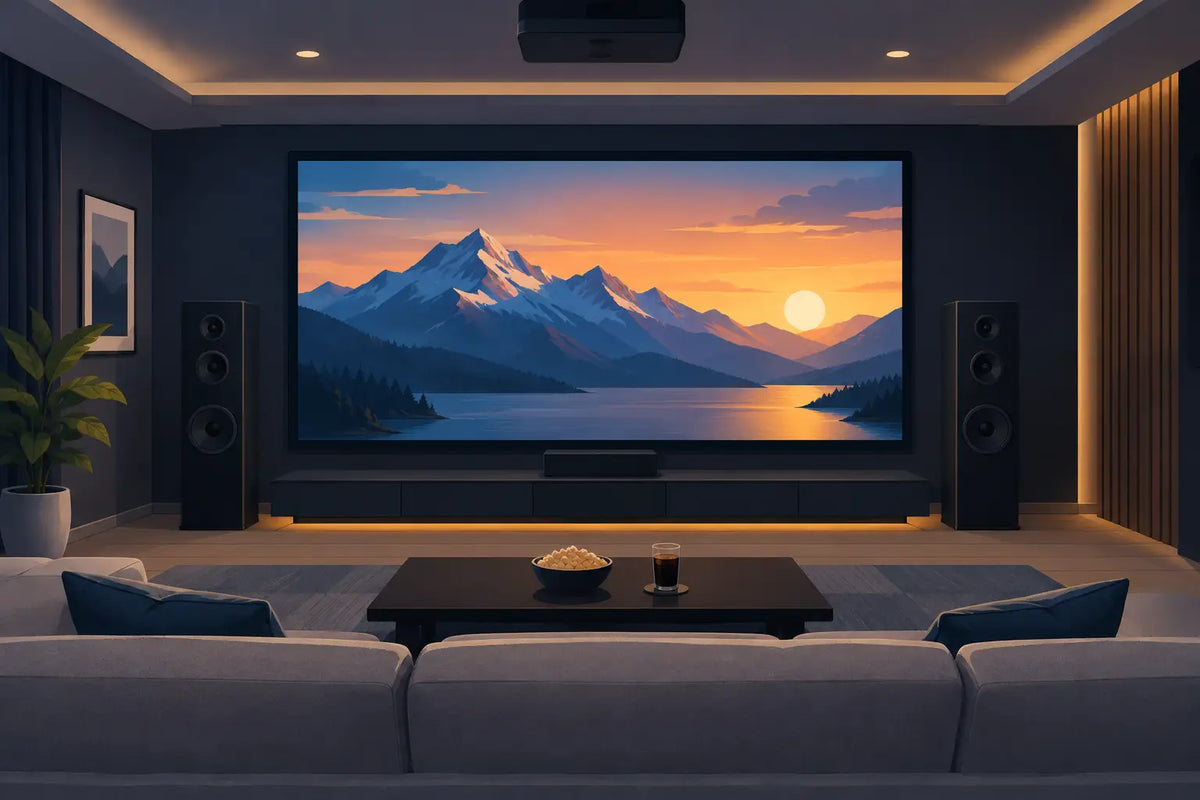
A dedicated cinema room gives the greatest freedom. You can control light, position the screen for the correct viewing distance, conceal cabling and incorporate acoustic treatment from the outset. Darker finishes improve perceived contrast, while fabric acoustic walls can absorb unwanted reflections without making the room feel clinical. This is where a large projection screen, immersive speaker layout and serious subwoofer system can really earn their place.
But a dedicated room is not the only route. Many of the most satisfying installations sit in multipurpose lounges and media rooms. Here, the priority is intelligent compromise: an OLED television rather than a projector if daytime viewing is essential, in-wall or ceiling speakers where floor space is limited, and furniture-friendly acoustic measures that preserve the room’s character. The aim is not to force a cinema design into a living room. It is to create an engaging system that suits how the household actually lives.
Picture Size Is About Distance and Light Control
Bigger is enjoyable, but bigger is not automatically better. Sit too close to an oversized screen and fine detail becomes tiring; sit too far away and even a very good display loses its cinematic presence. Screen size should be chosen alongside seating position, image resolution and the type of content you watch.
Projectors remain compelling because they deliver scale in a way no conventional television can quite match. In a properly light-controlled room, a quality projector and acoustically transparent screen can recreate the pleasing proportions of a commercial cinema while allowing speakers to sit behind the image. That gives voices a natural, anchored quality - as though they are coming from the actor, rather than below the screen.
For bright living spaces, a premium television often makes more practical sense. Modern OLED and high-performance mini-LED displays deliver excellent contrast, colour and HDR impact with far less concern about daylight. A large television can still be the centrepiece of a formidable home cinema, particularly when partnered with a properly designed surround system.
Sound Is What Makes Home Cinemas Convincing
Picture attracts attention first. Sound is what makes a film physical. The creak of a floorboard behind you, the movement of rain across the room, the sudden weight of an orchestral score - these details turn passive viewing into an experience.
A conventional 5.1 system remains an excellent starting point: three speakers across the front, surround speakers to the sides or rear, and a subwoofer for low-frequency effects. A 5.1.2 or 5.1.4 Dolby Atmos arrangement adds height channels, allowing effects and ambience to occupy a more believable three-dimensional space. Larger rooms may justify 7.1.4 or more ambitious layouts, but channel count alone is not a measure of quality.
A well-matched 5.1 system with careful speaker placement will often outperform a poorly arranged 7.1.4 installation. The front left, centre and right speakers should share a closely matched tonal character, because they handle the majority of music, effects and dialogue. The centre speaker deserves particular care. It is responsible for much of what you hear on screen, and it needs clear placement rather than being squeezed into a cabinet with its sound obstructed.
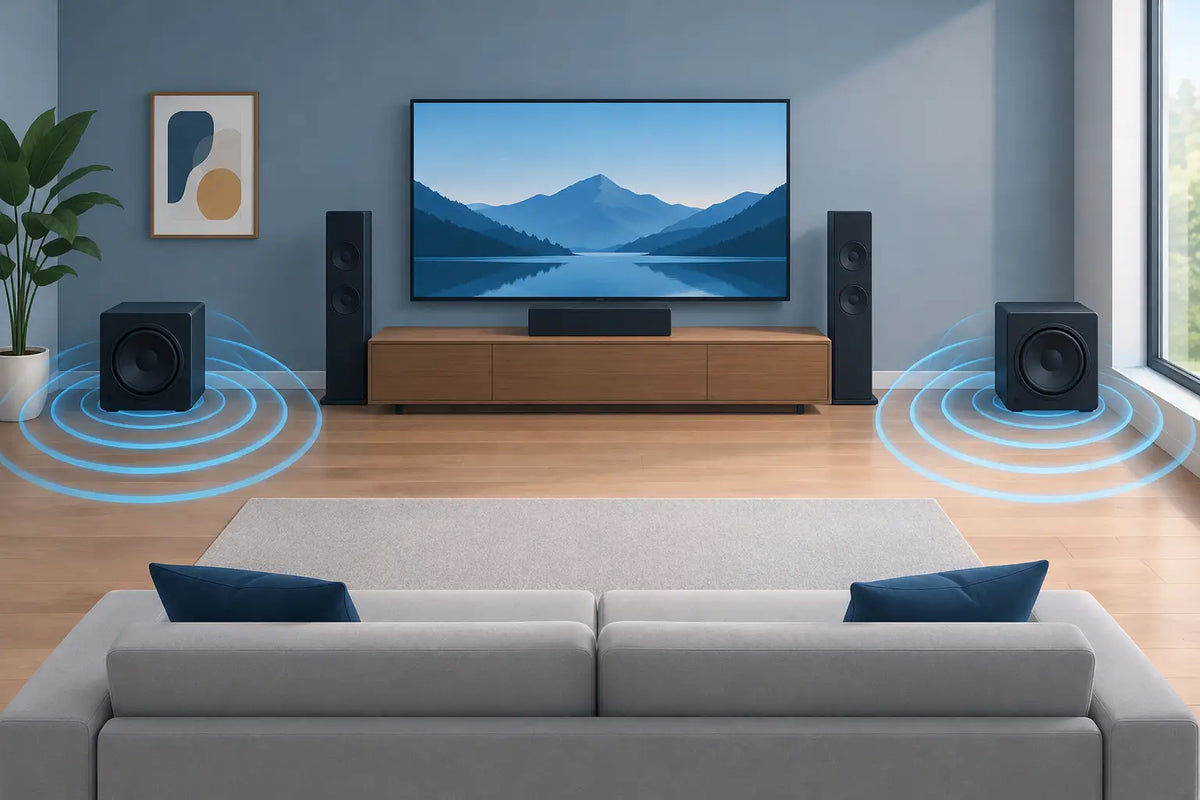
Subwoofers are another area where design beats assumption. One capable subwoofer can deliver impressive drama, yet two well-positioned subwoofers can often produce smoother, more even bass across several seats. That matters in family rooms, where the best seat should not be the only seat with convincing low-end performance.
Processing and Calibration Are Not Optional Extras
An AV processor or AV receiver does more than switch sources and provide amplification. It manages speaker distances, levels, bass distribution and surround decoding. Higher-end processing can make a substantial difference in complex systems, especially where multiple subwoofers and immersive channels are involved.
Automatic room correction is useful, but it is a starting point rather than a substitute for thoughtful installation. A microphone can measure a response; it cannot decide whether a speaker has been placed too low, whether a sofa is against the worst possible wall, or whether an acoustic panel would solve the issue more elegantly. Proper audio calibration combines measurement with listening and practical judgement.
This is one reason a demonstration is so valuable. Listening to different loudspeaker designs and processors in a properly set-up room reveals qualities that specification sheets cannot: dialogue texture, the speed of bass, the scale of a soundstage and the ease with which a system stays composed when a soundtrack becomes demanding.
Plan the Experience Beyond Film Night
The finest cinema rooms are flexible. They can handle the latest blockbuster, a box set, console gaming, live sport and a favourite album without becoming difficult to operate. That requires a sensible source plan and controls that feel natural to every user.
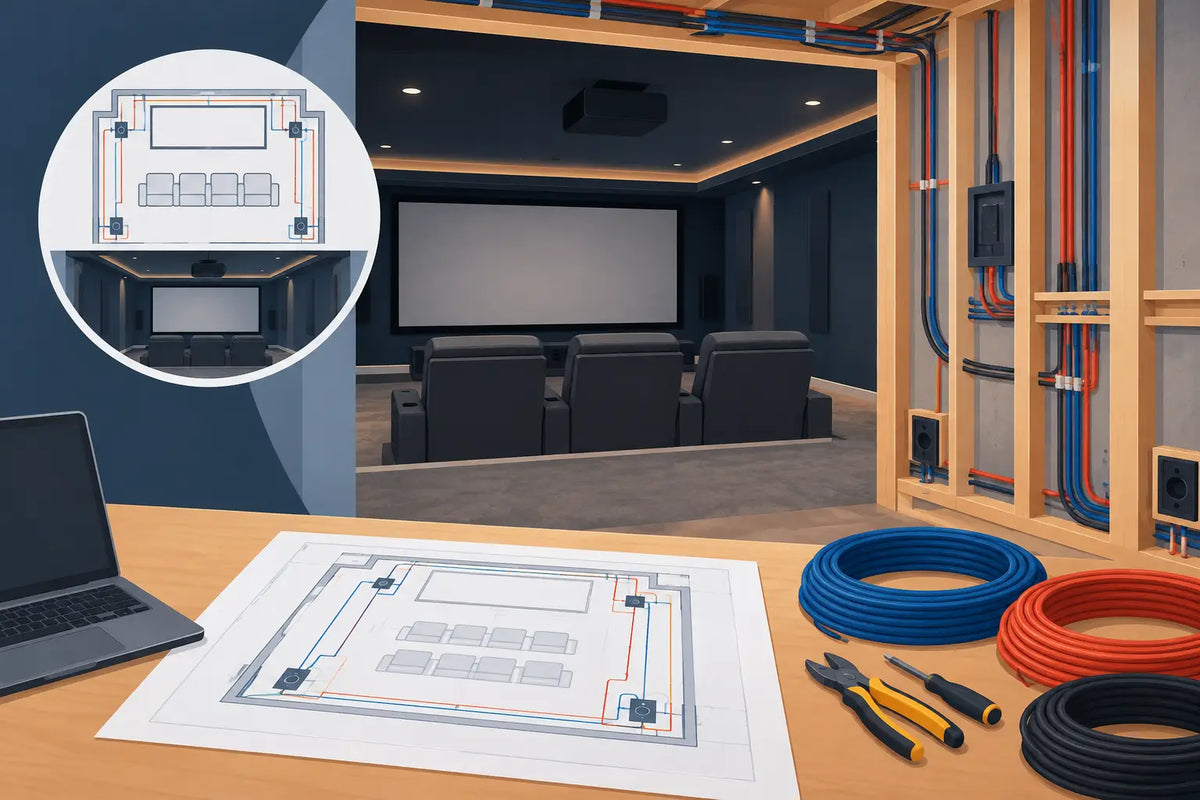
Consider where streaming devices, games consoles, satellite equipment and media servers will sit, how they will connect, and whether the system needs to work across more than one room. Cabling is easier and neater when planned before plastering or decorating, particularly for rear and height speakers. Equipment ventilation also deserves attention. Powerful amplifiers and processors generate heat, and a beautifully fitted rack is of little value if it cannot breathe.
Control should be equally considered. A single, clearly labelled handset, app or wall control can replace a pile of remotes and reduce the chance that the system becomes a source of frustration. Lighting scenes are worth including too. Lowering the lights, closing blinds and starting the film with one command may sound indulgent, but it is precisely the kind of detail that makes a room feel finished.
Where to Spend, and Where to Be Sensible
Budget decisions depend on the room and your priorities. In a dedicated cinema, acoustic treatment, loudspeakers, subwoofers and processing frequently deserve more attention than chasing the last increment of projector brightness. In a bright open-plan room, display performance and discreet installation may take precedence.
Avoid treating cables, racks and power provision as afterthoughts, but keep perspective. Good-quality, correctly specified cabling and a tidy, accessible installation are essential. They should support the performance of the system, not distract budget from the components and room work that make the audible difference.
For renovation projects, involve an AV specialist early - ideally before electrical and joinery decisions are fixed. At Yorkshire AV, customers can compare systems in dedicated listening rooms and a cinema demonstration space before committing to a design. Hearing the difference between alternatives is far more useful than trying to infer it from a specification list.
A home cinema should suit the room, the people who use it and the films they love. Give the project enough thought at the beginning, and the reward is not a room full of technology. It is the moment the lights go down, the opening scene begins, and home feels a little less like home.
Share:
How to Position Subwoofers for Better Bass