
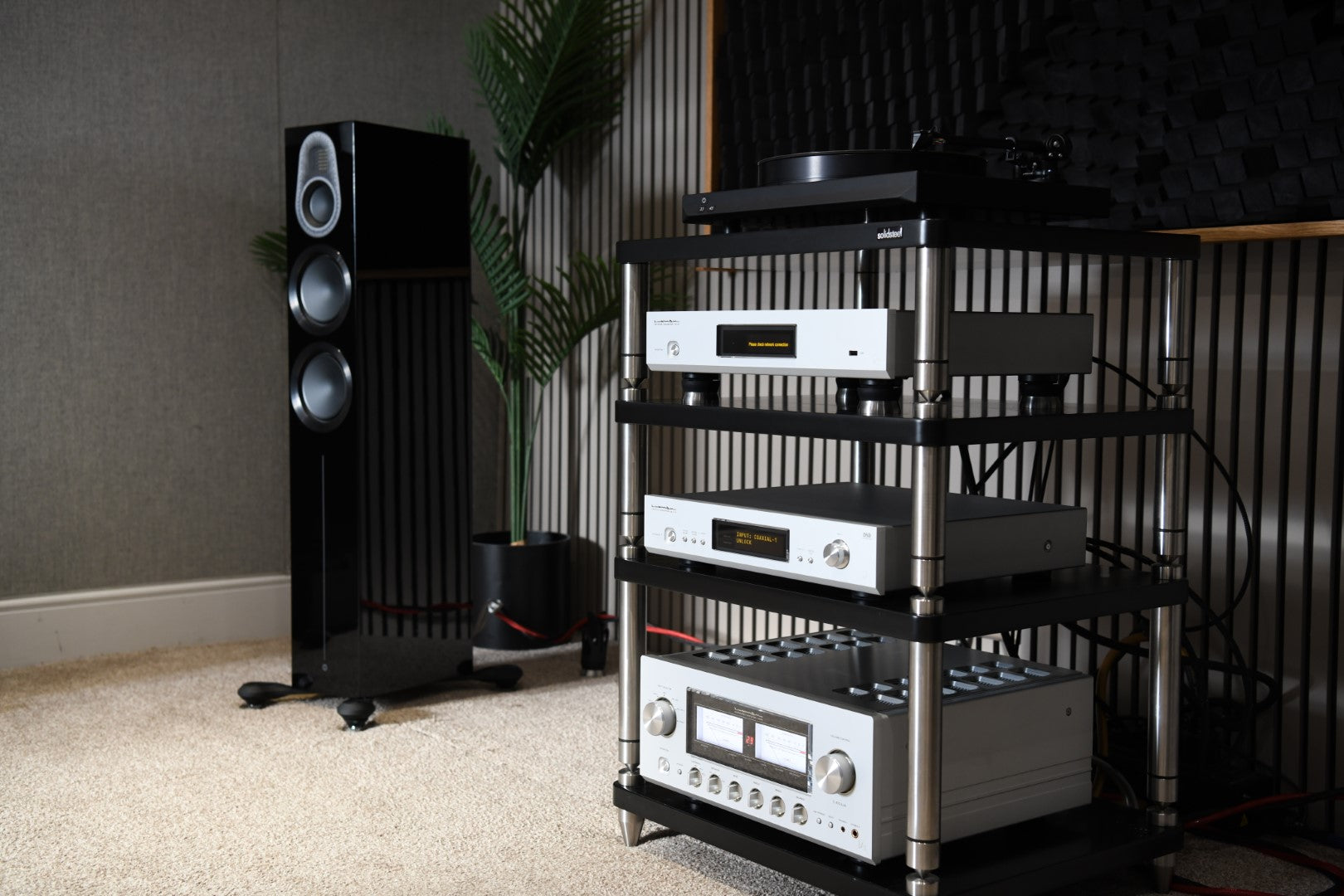
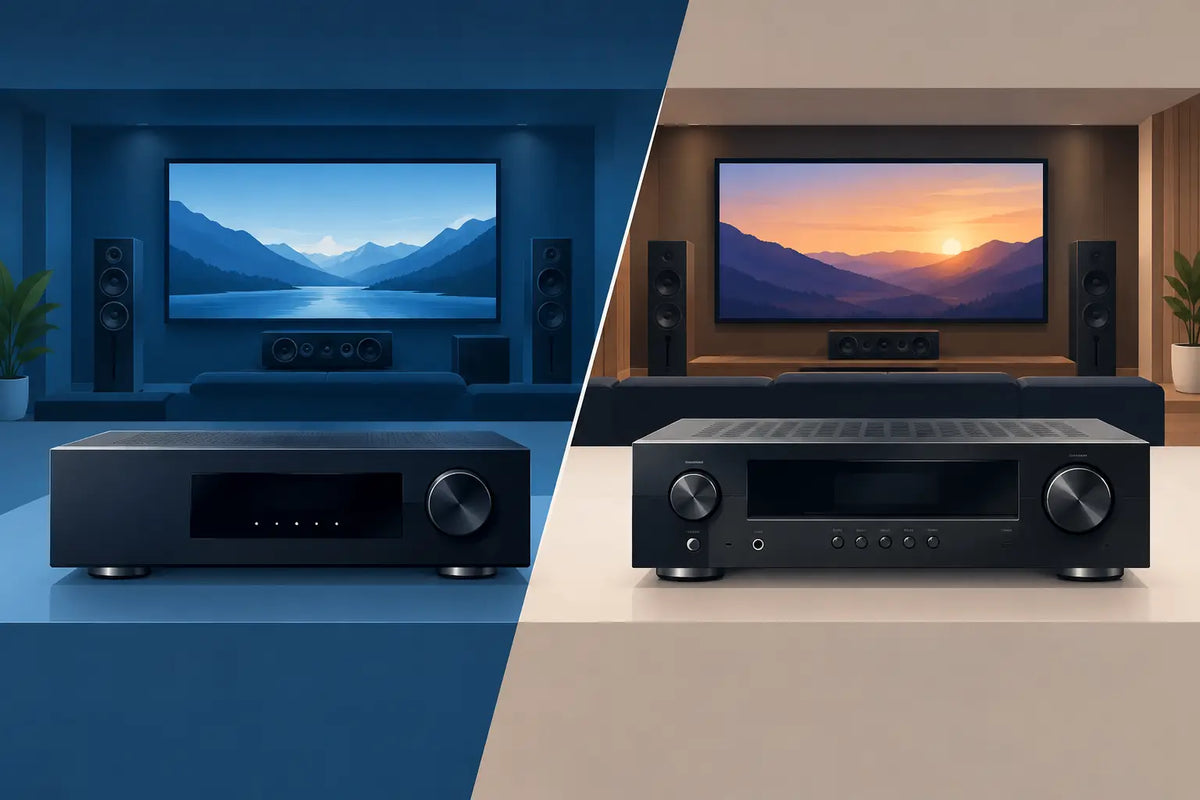
A serious home-cinema system often reaches a point where the question is no longer which loudspeaker to buy, but what should control it. In the AV processor vs receiver decision, the biggest difference is not the number of HDMI inputs or a line on a specification sheet. It is whether one box can do your room, loudspeakers and ambitions justice - or whether separating processing from amplification will let the system breathe.
For a compact living-room surround system, a quality AV receiver can be an enormously satisfying answer. For a dedicated cinema with multiple subwoofers, demanding loudspeakers and reference-level playback aspirations, an AV processor with separate power amplification is often the more convincing route. Neither is automatically better. The right choice depends on the system around it.
AV processor vs receiver: the essential difference
An AV receiver is an all-in-one home-cinema hub. It accepts sources such as a television, games console, streamer or disc player; decodes Dolby Atmos and DTS:X soundtracks; handles video switching; applies room correction; and includes power amplifiers to drive the loudspeakers. Add speakers, a subwoofer and source equipment, and you have a complete cinema system with comparatively little hardware.
An AV processor, also called an AV pre-processor or surround processor, performs the control and decoding side of this work but has no speaker power amplification on board. It must be partnered with one or more external power amplifiers. The processor sends low-level audio signals to those amplifiers, which then drive every speaker channel.
That distinction brings practical consequences. A receiver offers convenience, value and fewer boxes. A processor-based system offers greater flexibility, usually more scope for channel count and a clearer upgrade path. It can also make a substantial performance difference, particularly in larger rooms or at higher listening levels.
When an AV receiver is the smarter choice
It is easy to treat a receiver as the compromise option. That overlooks how capable modern premium receivers have become. A well-chosen model can decode immersive formats, pass high-bandwidth 4K and 8K video, support music streaming and apply sophisticated room correction, all while powering a 5.1, 7.1 or Atmos system from a single chassis.
For many households, this is exactly what makes sense. If the system shares a family lounge, equipment space is limited and the goal is enjoyable films, sport, gaming and music without a rack full of electronics, a receiver is remarkably effective. One remote-friendly central unit is easier to accommodate, install and live with.
Budget allocation also matters. In an entry-level or mid-range installation, spending the difference between a receiver and a processor-plus-amplifiers package on better loudspeakers, subwoofers or acoustic treatment may produce the greater improvement. A good receiver partnered with correctly positioned speakers will generally outperform a more expensive electronics package in a poor layout.
Receivers also offer useful flexibility for gradual development. Many have pre-outs, allowing external amplification to be added later for the front left and right speakers or every channel. This can be a sensible halfway house: start simple, then introduce a stereo power amplifier if you want greater grip and refinement for music.
The limitation is shared resources. A receiver houses processing, video circuitry, networking and several channels of power amplification in one cabinet. Its power supply and internal space must serve all of them. At sensible levels in a modest room, this is rarely a concern. Push a full Atmos soundtrack through less sensitive speakers in a larger space, however, and the amplifier section may begin to sound constrained. Effects can lose impact, dialogue may harden and the sense of effortless scale becomes harder to maintain.
Why choose an AV processor and separate amplifiers?
An AV processor is for the cinema enthusiast who wants each part of the system to have a dedicated job. The processor concentrates on decoding, HDMI management, bass control and calibration. External amplifiers are selected specifically for the loudspeakers and the room.
This is particularly valuable with demanding speaker layouts. A 7.2.4 Atmos system needs eleven amplified channels before considering additional subwoofers. A larger cinema may use 9.4.6 or more. While a receiver can sometimes process extra channels and use external amplification for the remainder, a processor is designed from the outset for this level of system building.
External amplification brings more than extra wattage. The useful measure is control: the ability to supply current when a soundtrack suddenly moves from a whisper to an explosion, while keeping the front soundstage composed and bass lines precise. With suitable amplification, a processor-based system can sound more open at low volume and more relaxed when played loudly. The difference is often felt as much as heard. A helicopter passing overhead retains shape and movement rather than becoming a wash of noise; orchestral scores hold their scale without swallowing dialogue.
Separates also allow thoughtful matching. You may want powerful multichannel amplification for a Perlisten or Monitor Audio cinema array, while choosing a more characterful two-channel power amplifier for the main speakers if music is equally important. A dedicated amplifier can be matched to the sensitivity, impedance and tonal balance of the chosen loudspeakers rather than accepting the one-size-fits-most amplifier stages inside a receiver.
There is a longevity benefit too. HDMI standards, video formats and surround decoding evolve more quickly than good power amplification. With separates, a future processor upgrade does not require replacing perfectly capable amplifiers. That does not make the route cheap, but it makes sense for a room intended to remain a serious entertainment space for many years.
Room correction is where the system becomes personal
Whether you choose a receiver or processor, room correction deserves close attention. Loudspeakers do not perform in a vacuum. Walls, ceiling height, furnishings and seating position all affect bass weight, dialogue clarity and the consistency of the surround field.
Many receivers include capable automatic calibration. Follow the microphone procedure carefully, check the resulting distances and crossover settings, and it can transform a system that previously sounded boomy or disjointed. It is not a substitute for sensible speaker placement, but it is a powerful finishing tool.
Higher-end processors often take calibration further, with more detailed measurement, finer bass management and the ability to work with several subwoofers as a coordinated system. Platforms such as Trinnov processing can map speaker positions in three dimensions and make highly precise adjustments. In the right cinema room, that degree of control is transformative: bass becomes tighter across more seats, panning is more believable and the soundtrack feels properly attached to the screen.
Still, calibration is only as good as the room and installer allow it to be. Acoustic walls, bass control, speaker positioning and carefully considered seating are not glamorous purchases, yet they often decide whether premium electronics sound merely impressive or genuinely involving.
The practical trade-offs: cost, space and heat
The processor route requires a realistic plan. You will need at least one power amplifier, often several, plus additional interconnects and proper ventilation. A multi-channel amplifier bank can be heavy, generate appreciable heat and demand a suitable rack or cabinet. Installation is more involved, especially where hidden cabling, projector control, lighting and multi-room integration are part of the brief.
Cost rises quickly as channel counts increase. A processor may cost more than a receiver before a single watt of amplification has been purchased. That investment can be entirely justified in a dedicated room, but it should not be made simply because separates look more serious.
A receiver remains the tidier option. It reduces mains leads, rack space and system complexity, and it can be easier for the whole household to use. Select one with enough amplified channels and processing headroom for your likely speaker layout, rather than buying for the room you have today if an Atmos expansion is planned next year.
How to decide for your room
Start with the loudspeakers, room size and intended listening level. A 5.1 system in a typical lounge, using reasonably efficient speakers, is normally an excellent receiver application. A receiver can also be right for a 5.1.2 or 7.1.2 setup where convenience is high on the list.
A processor becomes increasingly compelling when you are planning eleven or more channels, using difficult-to-drive loudspeakers, installing multiple subwoofers or building a dedicated cinema where performance at every seat matters. It is also worth considering when two-channel music is a major priority and you want the freedom to choose amplification accordingly.
Do not decide by power ratings alone. Manufacturers quote output under different conditions, and those figures tell only part of the story. Listening matters. The character of the processor, amplifier and speakers together matters. So does the room in which they will live.
At Yorkshire AV, the most useful starting point is often a proper conversation followed by a demonstration. Hearing a receiver-based system and a well-matched separates system makes the abstract differences much easier to understand. Bring your room dimensions, speaker ideas and a realistic budget. The best choice is the one that makes a quiet scene feel intimate, a concert film feel alive and Friday night cinema feel like an occasion worth switching everything else off for.


Share:
Projector Screen Size Calculator for Home Cinema
What Is Trinnov Calibration and Why It Matters