
The difference between background music and music you genuinely want to live with is usually made in the moments you did not plan: a favourite record starting as dinner is prepared, radio following you from the kitchen to the patio, or a film score carrying naturally into the adjoining space. A well-designed multi-room audio system makes those moments effortless, without asking every room to compromise on sound quality.
For some homes, that means a few elegant wireless speakers controlled from a mobile phone. For others, it means discreet ceiling speakers, carefully specified amplifiers and a central rack that keeps the technology out of sight. The right answer depends on the building, the rooms, how you listen and whether this is a simple upgrade or part of a wider renovation.
The Bluesound Pulse Flex is a great wireless speaker for multi-zone audio use

What a multi-room audio system should do
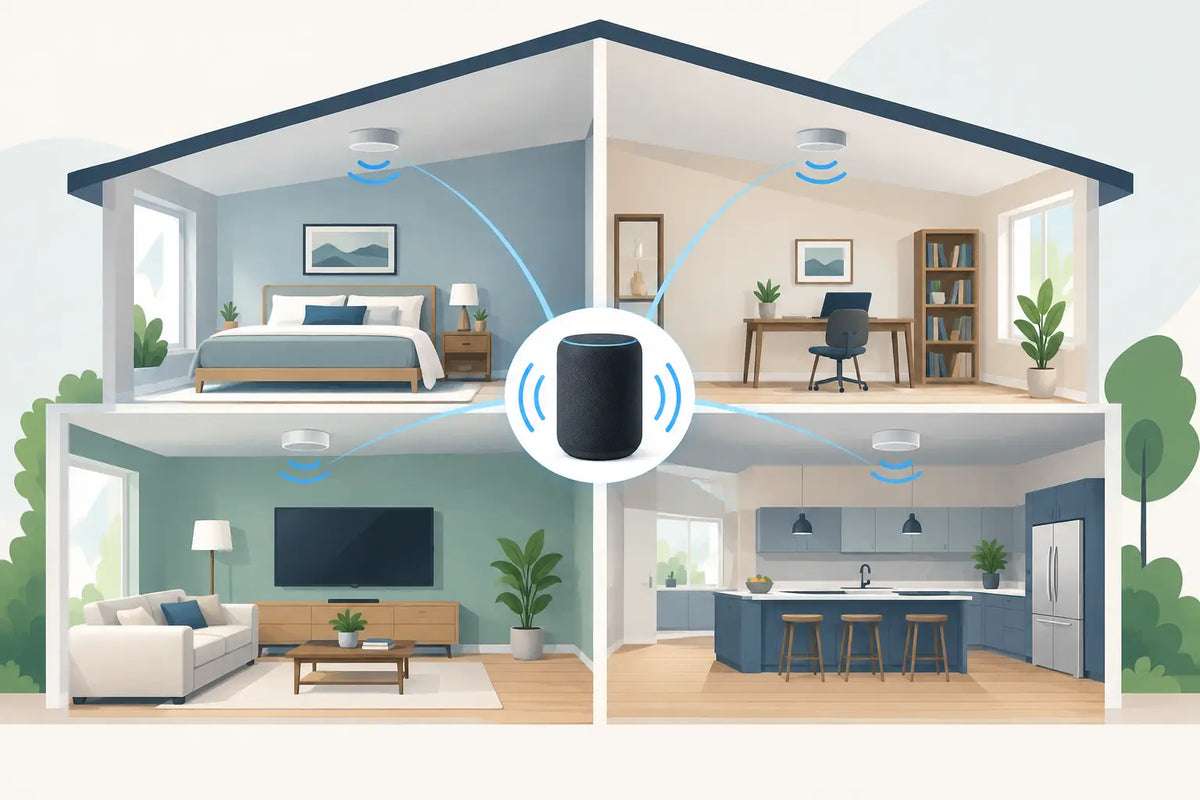
At its best, multi-room audio gives each room its own character while making the whole house feel connected. You might play vinyl in the sitting room, a podcast in the kitchen and a different playlist in a bedroom. Equally, you can group rooms together for one synchronised soundtrack when friends are round.
That flexibility matters because households rarely use every room in the same way. A kitchen needs clear, lively sound at sensible volume over extractor fans and conversation. A snug may deserve a proper pair of loudspeakers for focused listening. Bathrooms and gardens call for equipment selected for their environment, rather than a domestic speaker pressed into unsuitable service.
Good systems also avoid the small frustrations that spoil everyday use: audible delays between rooms, unreliable connections, too many remote controls or an app that the rest of the family refuses to use. Control should be intuitive, whether that is through a dedicated app, wall keypad, voice control or the streaming service you already know.
Start with rooms, not products
It is tempting to begin by comparing speaker brands or chasing a feature list. The better starting point is to map how your home actually works. Think about where music matters most, where it will simply provide atmosphere and which areas need to play together.
A typical arrangement may put a higher-performance stereo system in the main living room, with ceiling speakers in the kitchen-diner and compact speakers in bedrooms. The garden might be a separate zone, so it can be muted when not in use or played louder without affecting indoor listening. This approach concentrates budget where it will be heard most clearly.
Room construction should shape the plan too. Solid walls, listed-property restrictions, newly plastered ceilings and open-plan spaces all influence cable routes and speaker positions. In a renovation, pre-wiring before decorating is usually the neatest and most cost-effective route. In an established home, a wireless or hybrid system can reduce disruption considerably.
Choose the level of sound quality honestly
Not every zone needs the same specification. That is not a shortcut - it is sensible system design. A high-resolution streamer and dedicated amplifier feeding standmount or floorstanding loudspeakers can reveal the scale, texture and timing in a cherished recording. In a utility room, the priority may be coverage and reliable control.
The key is that secondary rooms should still sound enjoyable. Cheap ceiling speakers installed too far apart, or driven by an underpowered amplifier, can leave music thin and disjointed. Matching speaker sensitivity, amplifier power and room size is more meaningful than choosing components from a specification sheet alone.
Click here for a range of Multi Zone Audio Amplifiers
Wired, wireless or hybrid?
A wired multi-room audio system remains the strongest choice for larger projects, new builds and homes where long-term reliability is paramount. Speaker cable runs back to a central amplifier or equipment rack, allowing discreet in-wall or in-ceiling speakers and keeping visible boxes to a minimum. Wired networks can also give streaming devices a more dependable connection than Wi-Fi alone.
Wireless systems are attractive for their speed and flexibility. They are particularly effective in finished homes, rented spaces, bedrooms and rooms that may change purpose over time. The trade-off is that speaker placement is constrained by mains sockets, and wireless performance depends on the quality and coverage of the home network.
For many properties, hybrid is the sweet spot. The main hi-fi can remain a serious dedicated system, while network-enabled amplifiers supply ceiling speakers elsewhere. Wireless speakers can then be added to less permanent spaces. Everything can still appear as part of one familiar control platform, but each zone uses the technology that suits it.
Do not overlook the network
Music streaming is only as dependable as the network carrying it. A home with thick stone walls, several floors or a busy household full of connected devices may need a properly planned Wi-Fi system and wired access points. This is especially relevant when multiple zones play high-resolution music at once.
A professional installation should allow for future changes too. Equipment racks need ventilation, cabling should be labelled and spare capacity is worth considering if cinema, television distribution, security or additional rooms may follow. The most satisfying installations feel uncomplicated because the planning has been thorough.
Ceiling speakers: discreet, but not automatically invisible
Ceiling speakers are a natural fit for kitchens, dining areas, bathrooms and hallways. They preserve a clean interior and can spread music evenly across a larger space. Their appearance can be made particularly discreet with paintable grilles, although placement still deserves careful thought.
The Monitor Audio C1M in-ceiling speaker below, offers great performance

Avoid treating speaker positions as an afterthought once lighting, vents and joists are fixed. Stereo pairs should be placed to create a believable image where possible, rather than simply filling every spare ceiling tile. In open-plan rooms, it may be better to use two zones with independently controlled pairs, allowing music to follow the activity without overpowering the whole area.
Acoustic treatment is sometimes relevant here, particularly in large kitchens with hard floors, glass and stone worktops. More volume is not always the answer to poor clarity. Thoughtful speaker choice, sensible placement and a little absorption can make speech and music much easier to enjoy.
Bring proper hi-fi into the system
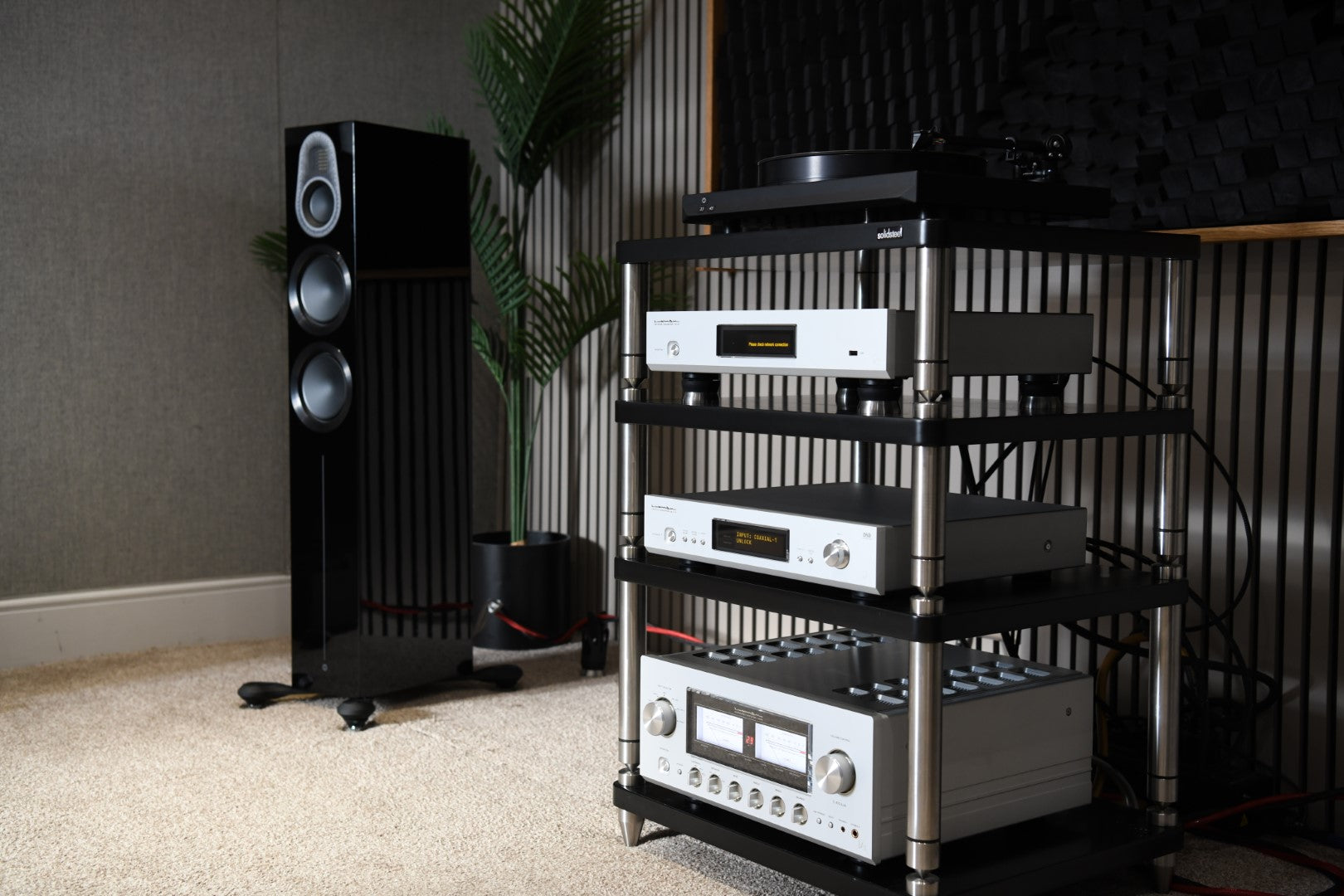
A multi-room installation does not mean abandoning the system you already love. A turntable, CD player, television audio or high-end streamer can often be shared with other rooms, subject to the chosen platform and source connections. This is where careful system matching becomes particularly valuable.
Vinyl requires special consideration. If you want a record playing in the lounge to reach other rooms, the signal needs to be distributed correctly from the phono stage or amplifier. Some solutions introduce a slight delay to maintain synchronisation between zones, which may be perfectly acceptable for casual listening but less satisfying if you can hear the main room and kitchen at the same time. It is worth discussing how and where you listen before deciding.
Likewise, television sound is not always suitable for distribution around a house. Film dialogue can be useful in an adjoining kitchen during a match, but lip-sync and source limitations need checking. A dedicated cinema room should remain focused on its own precise audio calibration and immersive surround presentation rather than being compromised for whole-house convenience.
Control that everyone will use
The strongest technology disappears into routine. A guest should be able to select music without a tutorial, and a family member should not need to turn on three components before breakfast radio works.
App control is often the most flexible option, with access to streaming services, favourites, volume and room grouping. Wall keypads are useful where mobile phones are not always to hand, particularly kitchens and hallways. Voice control can be convenient for quick requests, although it is best treated as an extra layer rather than the only means of operating the system.
Spend time setting up favourites, sensible room names and default volume limits. A zone labelled “Kitchen” is clearer than “Amp 2”, and a carefully capped maximum volume can prevent an accidental party-level blast through ceiling speakers. These are small details, but they turn a technically impressive installation into one people enjoy every day.
When expert design earns its place
There is a meaningful difference between buying compatible products and creating a system that performs properly in a real home. Speaker positions, cable paths, amplifier loading, Wi-Fi coverage, ventilation and source integration all interact. A site visit is particularly valuable where ceilings need cutting, equipment needs concealing or the project includes home cinema and acoustic work.
At Yorkshire AV, systems can be planned around both the sound you want and the way your household lives, from a discreet kitchen zone to a fully integrated home entertainment project. Hearing different approaches in a dedicated listening room can also make decisions far clearer than comparing product photographs and specifications.
The most rewarding system is not necessarily the one with audio in every corner. It is the one that brings music naturally into the rooms where life happens, sounds excellent when you stop to listen, and remains simple enough that everyone reaches for it without thinking.

Share:
Best Headphones for Classical Music and How to Choose