
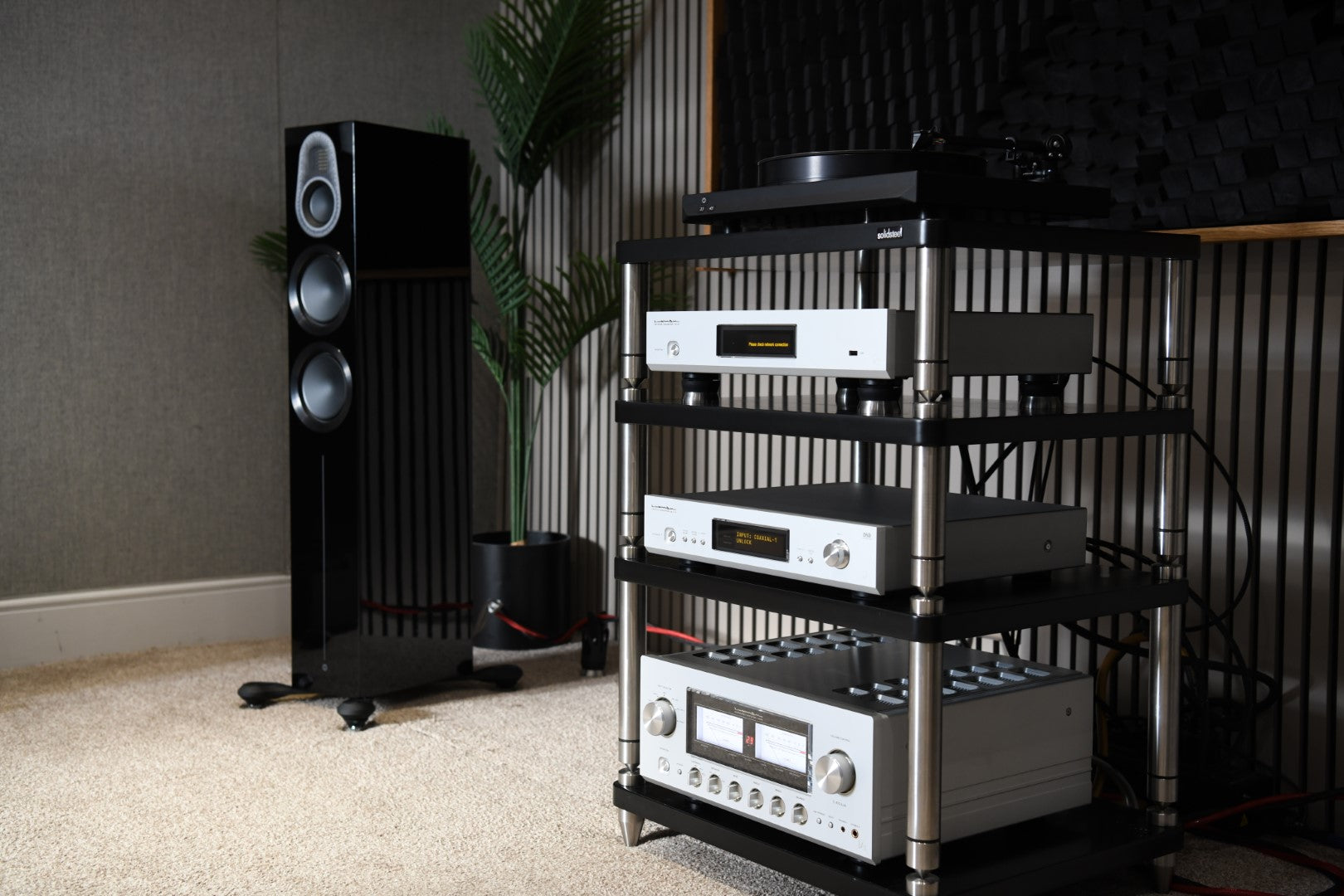
A beautifully specified system can still disappoint when the room is doing half the talking. You recognise it when a vocal image wanders away from the loudspeakers, bass swells in one seat and vanishes in another, or a film soundtrack feels loud without becoming involving. Fabric acoustic wall panels address the reflections and resonance that blur those details, while giving a listening room or cinema a considered, architectural finish.
For music lovers, that can mean hearing the space around a recording without the room adding its own haze. For film lovers, it means dialogue that stays clear at sensible levels, effects that travel convincingly across the soundstage and a room that feels calm rather than over-stimulated. The best result is not a room that sounds dead. It is a room that lets the system do what you bought it to do.
What Fabric Acoustic Wall Panels Actually Do
Most domestic rooms have hard, parallel surfaces: plasterboard, glazing, timber flooring, fitted furniture and screens. Sound reflects from them in fractions of a second. Those early reflections combine with the direct sound from your loudspeakers, altering tonal balance, weakening stereo focus and making the presentation feel more confused as volume rises.
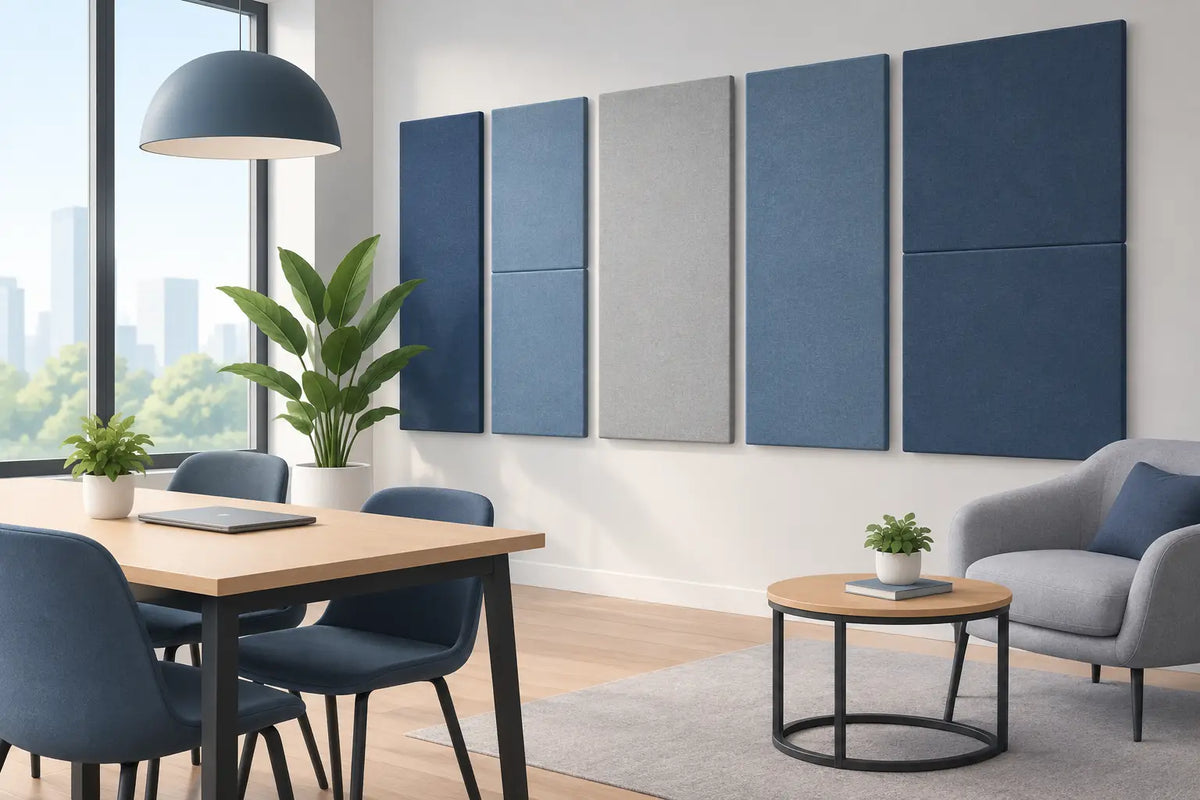
Fabric-covered panels usually contain an acoustically absorbent core, mounted directly to the wall or built into a framed acoustic wall. They absorb a useful proportion of mid and high-frequency energy, particularly at first-reflection points and across the front and rear areas of a cinema room. The fabric is not simply decorative. It needs to be acoustically transparent so sound can reach the absorber behind it rather than bounce straight back into the room.
The effect can be striking, but it is also easy to misunderstand. Standard wall panels are not a cure for every acoustic issue. They will not, on their own, tame deep bass modes caused by room dimensions, nor will they correct a poorly positioned subwoofer. They are one part of a properly balanced acoustic plan, alongside loudspeaker placement, seating position, bass management, calibration and, where needed, dedicated low-frequency treatment.
Why a Treated Room Sounds More Convincing
The clearest improvement is often intelligibility. In a home cinema, centre-channel dialogue gains definition because competing reflections are reduced. You should not need to turn the volume up just to follow a quiet exchange, then reach for the remote when the action starts.
With two-channel music, the benefits are more spatial. A well-recorded vocal becomes easier to place between the loudspeakers. Instruments occupy distinct positions rather than clustering around the cabinets, and subtle reverberation in a recording is more apparent. This matters whether you are enjoying a cherished vinyl pressing through a carefully matched amplifier and loudspeakers or streaming high-resolution audio.
There is a practical family-life benefit too. Lower reverberation makes a room less tiring during a long film or a busy evening of music, conversation and television. Treatment will not make a cinema room silent outside its walls - that is a sound insulation question involving construction, mass and isolation - but it can make the room itself far more civilised to occupy.
Absorption Is Not the Same as Soundproofing
This distinction is worth making before any project starts. Acoustic absorption controls how sound behaves within a room. Soundproofing, more accurately called sound isolation, limits how much sound passes through walls, floors, ceilings and doors.
A fabric panel can improve clarity inside a media room enormously, yet it will not stop a powerful subwoofer transmitting bass through a suspended floor to the bedroom below. If privacy, late-night viewing or neighbour disturbance is central to the brief, the room construction must be assessed before decorative finishes are chosen. It is far easier to build the right layers into a renovation than retrofit them after the cinema is complete.
Where Fabric Acoustic Wall Panels Work Best
First-reflection points are usually the highest-value locations in a music room. These are the points on the side walls where sound from each loudspeaker reaches the main listening position shortly after the direct signal. Treating them can sharpen imaging without covering every available surface.
In a dedicated cinema, a more comprehensive approach is often appropriate. Acoustic walls can conceal treatment behind a continuous fabric finish, commonly around the front speaker wall, side walls and rear wall. They also provide a clean way to integrate in-wall speakers, cable routes, ventilation details and equipment access without letting the room become visually technical.
The front wall behind the screen deserves particular attention. A woven acoustically transparent projection screen can allow left, centre and right speakers to sit behind the image, just as they do in a commercial cinema. With suitable treatment around them, voices appear to come from the actor rather than a speaker below the screen. That is one of the details that makes a dedicated room feel properly immersive.
Not every home needs full-height fabric walls. In a lounge, a small number of discreet panels can be highly effective and can be selected to complement existing décor. In an open-plan space with extensive glass and hard flooring, treatment may improve the listening area, but there are limits when the volume of the room and adjoining spaces remain acoustically live. Expectations should be set around the room you have, not an idealised laboratory.
Choosing the Right Panel Design
Panel depth has a direct bearing on performance. Slim panels are helpful for controlling higher-frequency reflections and keeping visual impact modest. Deeper panels, especially when installed with an air gap behind them, extend absorption lower into the midrange. This can deliver a fuller, more relaxed result, though it takes more wall depth and needs to be planned around doors, radiators, sockets and sightlines.
Fabric choice matters both sonically and visually. The material should be rated for acoustic use, tightly fitted and suitable for the intended environment. Neutral charcoal, soft grey and deep navy remain popular for cinema rooms because they reduce distracting light reflections. In a listening room or multipurpose space, warmer textures and lighter colours may suit the scheme better. The right choice is the one that supports the room’s use rather than making it feel like an equipment bunker.
For cinema projects, consider the complete wall build-up early. A fabric finish can conceal removable access panels, cable infrastructure and speaker locations, but only if those details are drawn into the design. Retrofitting a new HDMI cable, servicing an in-wall loudspeaker or reaching a network switch becomes frustrating if access has been treated as an afterthought.
Avoiding an Over-Treated Room
More absorption is not automatically better. A room treated heavily with broadband absorption can lose some of the natural energy that makes music feel open and engaging. The goal is controlled decay and cleaner imaging, not an unnaturally muffled character.
This is where diffusion can have a role. Diffusive surfaces scatter sound rather than simply absorbing it, helping preserve a sense of spaciousness in larger rooms. Furniture, shelving and irregular architectural features also affect the final outcome. A dedicated cinema may benefit from substantial absorption, particularly around the screen and first reflections; a two-channel room often calls for a more measured blend.
Measurements are valuable here, especially for bass response and decay times, but they should support listening rather than replace it. A graph can identify a persistent room mode. It cannot tell you whether the system gives you goosebumps during a favourite record. Both matter.
A Better Way to Plan an Acoustic Wall
Start with the system and the room together. Establish loudspeaker, screen and seating positions before deciding where fabric panels will sit. The main seat may look central on a plan yet land in a bass null, while moving it a modest distance can transform low-frequency consistency.
Next, decide what the room needs to become. A cinema for family viewing has different priorities from a reference two-channel room, and a combined media lounge has different compromises again. Consider lighting, blackout, storage, heating, control interfaces and the likelihood of future upgrades alongside the acoustic treatment.
Finally, use an installation approach that respects the finish as much as the performance. Clean fabric lines, accurate detailing around sockets and door frames, appropriate fire-rated materials where required, and sensible access provision are what separate a polished acoustic wall from a collection of panels fixed to plasterboard. At Yorkshire AV, this joined-up thinking is central to dedicated cinema and listening-room projects: the system, calibration and room treatment should work as one.
If you are planning a new cinema, renovation or serious hi-fi upgrade, hear the difference before committing to a design. A carefully treated demonstration room reveals why acoustic work is not an optional flourish - it is often the point at which excellent equipment becomes truly believable.

Share:
How to Improve Room Acoustics Properly
In Ceiling Speaker Installation Done Properly