
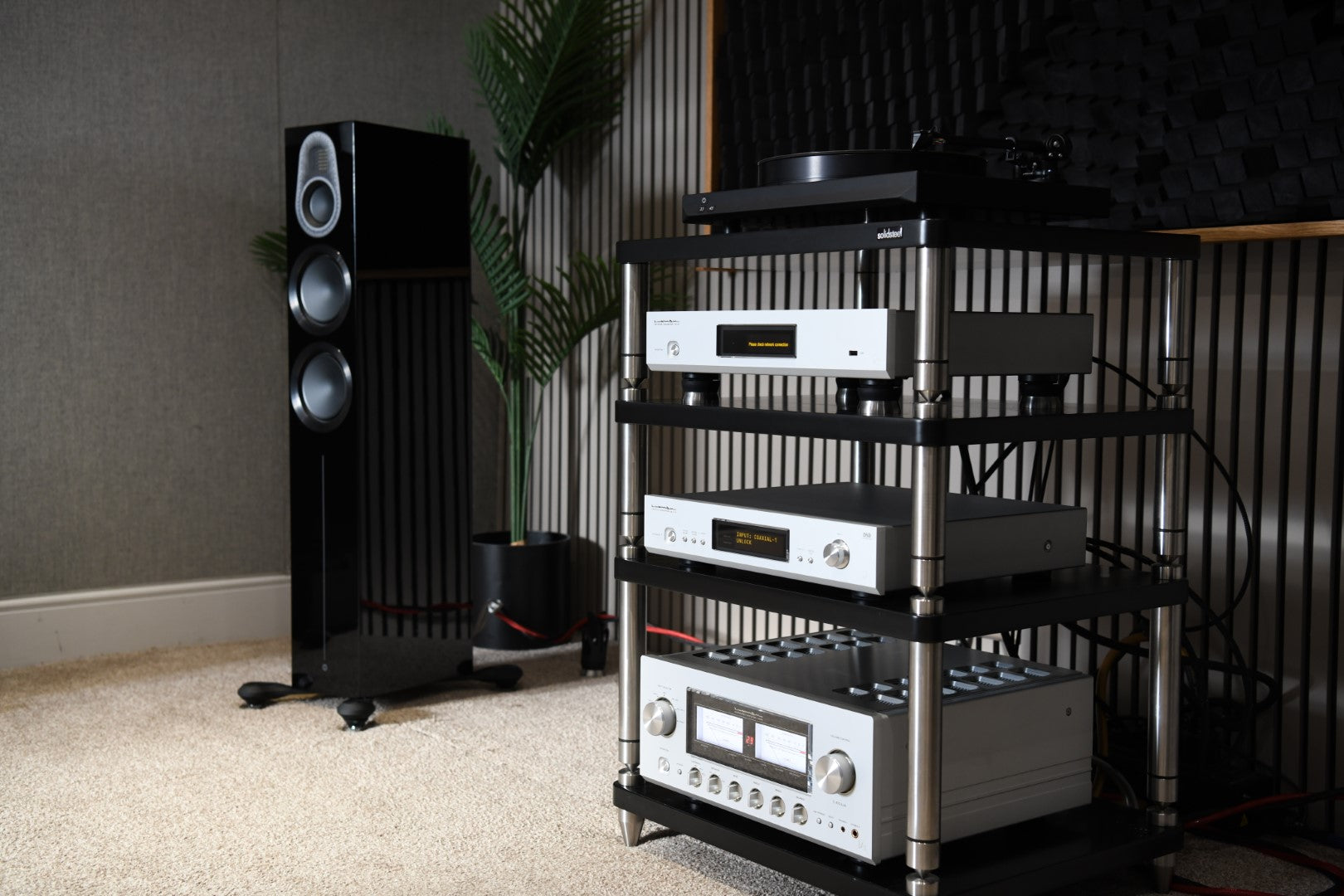

That low 50Hz drone can turn a favourite record from an involving performance into a distraction you listen for between every track. The encouraging news is that most cases are not a fault with the turntable itself. Learning how to reduce turntable hum is usually a matter of tracing one unwanted path in an otherwise excellent system: an earth connection, a cable route, a cartridge wire or the proximity of a mains transformer.
A little method goes a long way. Change one thing at a time, listen, and put it back if the result is no better. That approach protects the qualities you bought a vinyl system for in the first place: space, texture, dynamics and the physical presence of a good pressing.
First, identify the noise you are hearing
Not every unwanted sound is electrical hum. A steady low-pitched tone that remains when the stylus is lifted from the record is generally hum. In the UK, it is commonly related to 50Hz mains interference, sometimes accompanied by a higher harmonic that sounds more like a buzz. If the sound changes when you touch the tonearm, turntable chassis or amplifier, an earthing issue becomes especially likely.
Rumble is different. It is a low-frequency mechanical noise that tends to appear only with the record playing, often more noticeably during quiet passages or when the speakers are working hard. It can come from the turntable bearing, motor, shelf or footfall through a suspended floor. Hiss, meanwhile, is normally gain-related rather than an earth-loop problem.
Start with the volume at a sensible level and no record playing. Lift the stylus safely off the vinyl, then switch the turntable motor on and off. If the noise arrives only when the motor runs, placement and mechanical isolation deserve attention. If it is there regardless, look first at grounding, cabling and the phono stage.
How to reduce turntable hum: start with earthing
Many turntables use a separate earth wire, usually a thin cable ending in a spade connector. It should normally be connected to the ground terminal on your phono preamplifier or integrated amplifier. Tighten it securely, but there is no need to overtighten the terminal.
This connection gives stray electrical noise a controlled route away from the delicate cartridge signal. A moving-magnet cartridge produces a tiny output, while a moving-coil cartridge produces less still. The phono stage then applies considerable gain, which is why a connection that seems inconsequential elsewhere in a hi-fi system can become obvious through your loudspeakers.
There is one caveat: not every turntable, amplifier and phono stage combination wants a separate earth lead connected in the same way. Some designs earth through the left-channel signal return; some have internal grounding arrangements. If adding the earth wire creates or worsens a buzz, try disconnecting it briefly with the volume low. The quieter arrangement is normally the correct one. Consult the manuals for your specific components before improvising permanent changes.
If you use an external phono stage, earth the turntable to the phono stage rather than the amplifier, unless the manufacturer explicitly specifies otherwise. Keep the phono stage close enough for the supplied lead to reach comfortably, but not so close that it sits beside a large mains transformer or power supply.
Check the cartridge wires and headshell contacts
A hum that appears in only one speaker often points towards the cartridge connections. With the amplifier switched off, remove the headshell if your turntable has a detachable one, or carefully inspect the tiny colour-coded wires at the back of the cartridge. They must be fully seated and connected to the correct pins.
The usual convention is red for right positive, green for right negative, white for left positive and blue for left negative. But rely on the markings supplied with the cartridge where possible, particularly on older equipment or specialist tonearms. These connectors are delicate. Pull them from the metal sleeve with fine pliers, not from the wire itself.
Oxidised headshell contacts can also introduce noise or intermittent channel issues. A gentle clean with an appropriate electrical contact cleaner on a lint-free swab is usually enough. Avoid soaking anything, and allow it to dry completely before reconnecting. This is careful work rather than difficult work, but if the clips are loose or the wiring looks fragile, a dealer can sort it without risking a damaged cartridge pin.
Keep low-level cables away from mains equipment
The cable between turntable and phono stage carries one of the most vulnerable signals in your entire system. Running it alongside mains leads, extension blocks, power supplies, routers or the cable feeding an amplifier can allow interference into the signal path.
Separate the phono cable from mains cables wherever practical. If they need to cross, cross them at roughly 90 degrees rather than running them side by side. Do not coil excess cable into a tight loop behind the rack. A relaxed route with physical distance from power supplies is usually better.
Pay particular attention to wall-wart power supplies and the substantial transformers found in some integrated amplifiers. Placing a turntable directly above an amplifier may look neat, but it can make hum more likely, especially with a high-gain moving-coil phono stage. A proper rack or a dedicated wall shelf gives the deck both electrical breathing room and better protection from vibration.
Cable quality matters, but this is not a reason to replace everything immediately. First prove the cause by moving what you already own. If a cable needs replacement, choose a properly screened phono interconnect with sensible capacitance for your cartridge type and a secure earth arrangement. The best cable is the one that suits the cartridge, the arm and the system, not simply the one with the most elaborate construction.
Rule out a ground loop elsewhere in the system
A ground loop occurs when connected components have more than one path to earth, creating a small circulating current that you hear as hum. Turntables are often blamed because phono amplification makes the issue audible, yet the source may be a television, set-top box, network switch, powered subwoofer or another item connected to the same amplifier.
To investigate, disconnect non-essential source components from the amplifier one at a time, leaving the turntable and phono stage connected. If the hum disappears after removing a particular device, you have found the interaction. Reconnect it and consider its power arrangement, aerial connection or signal cabling rather than altering the turntable first.
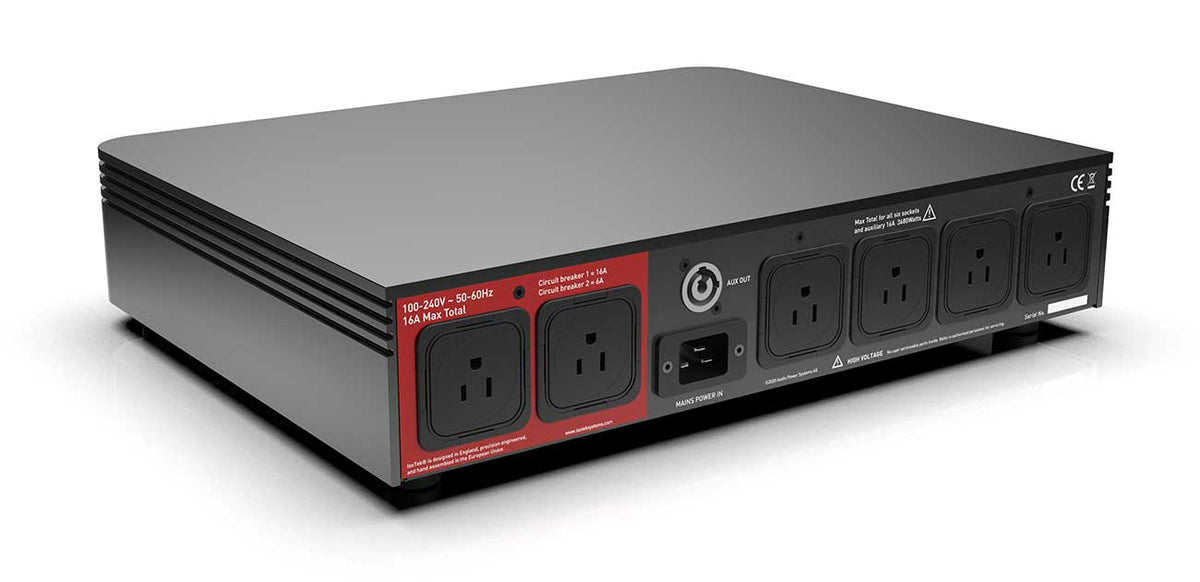
Power everything from the same quality mains block where feasible. This can reduce differences in earth potential between components. It is not a cure-all, and it should never involve defeating safety earths or using unsafe adaptors. If you are uncertain about a mains-related issue, stop and seek professional advice. Safety comes before silence.
Make sure the phono stage settings are correct
Incorrect gain will not usually create true hum, but it can make a faint underlying noise far more apparent. A moving-magnet cartridge normally needs less gain than a moving-coil design. If your phono stage has adjustable gain, loading or impedance settings, begin with the cartridge manufacturer’s recommended values.
Excess gain can leave you turning the amplifier volume down while amplifying every trace of noise from the front end. Too little gain can encourage the opposite habit: turning the amplifier up until system noise becomes more conspicuous. The right setting gives satisfying volume with useful control range and keeps quiet passages properly quiet.
Moving-coil cartridges require extra care because their output is so low. They reward a carefully matched phono stage, short well-routed cabling and thoughtful equipment placement. A step-up transformer can be wonderfully musical in the right system, but it must be positioned carefully too, as transformers can pick up magnetic fields.
Address vibration if the sound is more of a rumble
If your issue changes when people walk across the room, when the bass becomes energetic or when the stylus reaches a warped record, the solution may be mechanical rather than electrical. Check that the turntable is level, its feet are stable and the shelf beneath it does not flex. Keep loudspeakers away from the turntable where the room allows, particularly on timber floors.
A wall shelf fixed to a solid wall can be transformative in some homes, while a well-designed equipment rack may be the better answer on concrete floors or where wall mounting is impractical. The right choice depends on the construction of the room and whether the deck itself has a suspended or rigid-plinth design.
Also inspect the basic setup: tracking force, anti-skate and cartridge alignment. These adjustments will not cure a 50Hz hum, but a poorly set-up cartridge can exaggerate surface noise, mistracking and low-frequency instability that is easily mistaken for a bigger electrical problem.
When it is worth asking for help
If you have checked the earth lead, cable routing, cartridge contacts and phono settings and the hum persists, the next step is diagnosis rather than random upgrades. A specialist can test the turntable, cartridge, phono stage and amplifier as a system, identify whether the noise follows a component or only appears in your room, and make sensible recommendations.
At Yorkshire AV, that kind of methodical listening is central to building a system that feels effortless. Vinyl should deliver the hush before the first note, then the full scale of the recording when the music begins. Once the unwanted noise has gone, you can get back to the reason the record came out of its sleeve in the first place.

Share:
OLED vs projector: which suits your cinema room?