
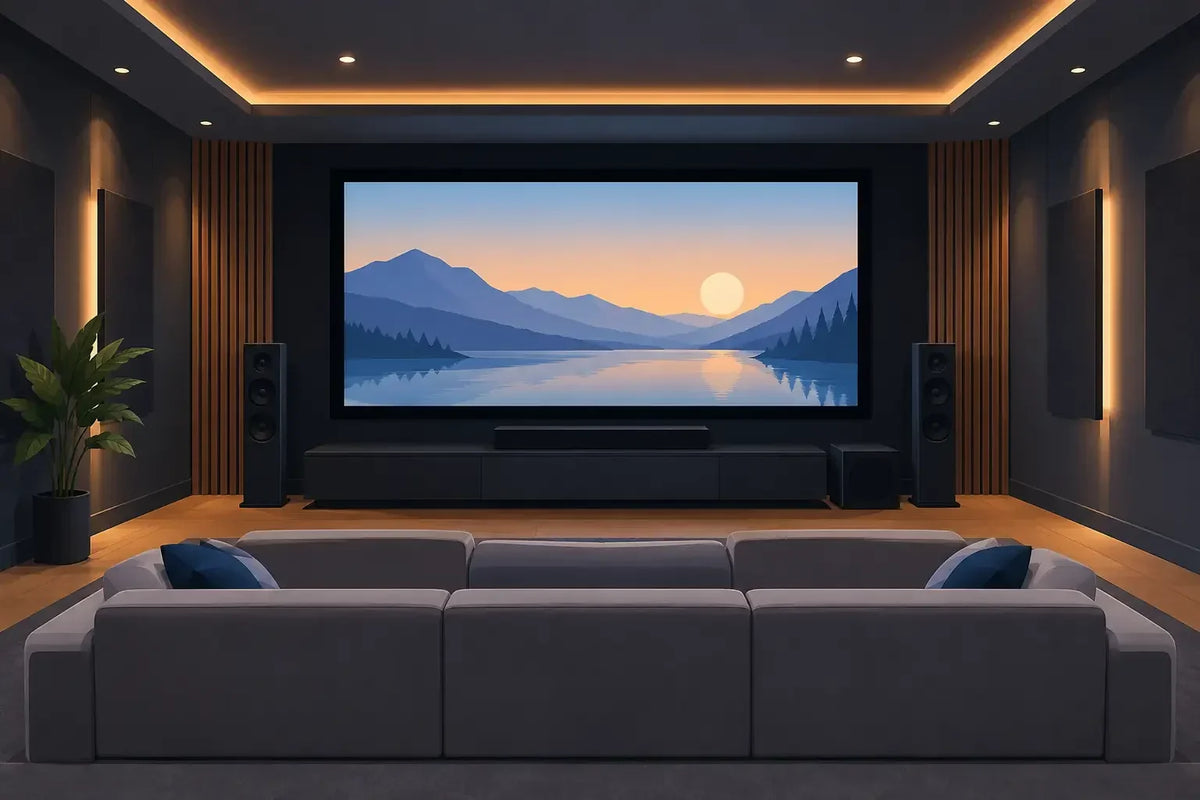
The difference between a pleasant film night and a genuinely cinematic one is rarely the size of the television alone. The most successful home cinema room design ideas begin with the room itself: where sound can breathe, where light can be controlled, and where every seat feels involved when the opening scene begins.
Click here for details on our Flagship Cinema Room at our Showroom
A dedicated cinema should feel exciting, but it also needs to work for real family life. That means balancing reference-level performance with comfortable seating, sensible access, straightforward control and a finish that belongs in your home. Get the foundations right and even a modestly sized room can deliver a picture and soundtrack that makes the local multiplex feel a long way away.

1. Start with the room, not the equipment
It is tempting to choose a projector, speaker package or enormous screen first. In practice, the room dimensions and layout should lead the design. A rectangular room is usually easier to work with than an open-plan space because it gives you more control over sound reflections, speaker placement and ambient light.
Avoid placing the main seats directly against the rear wall if possible. Bass tends to build up there, which can make action scenes sound heavy and indistinct rather than powerful. Bringing the seating forward even 30 to 60cm can improve clarity, while also creating useful space for rear surround speakers or acoustic treatment.
Ceiling height matters too. A lower ceiling can still support immersive Dolby Atmos sound, but speaker positions and seat height need more careful planning. In a larger room, consider whether a second row of seating is genuinely useful. A raised rear platform can look superb, though it requires enough ceiling clearance and should be designed so every viewer has a clean sightline to the screen.
2. Choose screen size from viewing distance
The right screen should fill your field of view without making subtitles tiring to follow. For a 4K projector or television, a closer seat can work beautifully because the higher resolution keeps fine detail intact. However, room proportions, screen aspect ratio and the preferences of the people using it all play a part.
A widescreen 2.35:1 or 2.40:1 screen gives films a properly cinematic sweep, especially when paired with a projector and lens memory. It is an excellent choice for households that watch a lot of films. A 16:9 screen is more flexible for sport, gaming and television, as there are no black side bars with standard broadcast content.
There is no universal winner. If Formula 1, football and console gaming share equal billing with films, 16:9 may be the more practical choice. If Friday night is for cinema releases and director’s cuts, the wider format makes a compelling case.
3. Treat light control as part of picture quality
A premium projector cannot show its best black levels in a pale room with uncovered windows. Light control is one of the highest-value decisions in any cinema project. Blackout blinds, lined curtains or integrated shading should be considered early, particularly in rooms with south-facing glazing.
Dark, matt finishes around the screen are just as valuable. They stop reflected light washing back onto the image and help your eyes focus on the picture. Deep charcoal, navy, burgundy and near-black can all work well, but a cinema room need not resemble a black box. Use the darkest finishes at the front of the room and bring in warmer textures through fabric walls, timber details and seating.
For rooms that cannot be fully darkened, a high-performance television may be the better option. Modern large-format displays offer impressive brightness and convenience, while a carefully chosen projector retains the edge for sheer image scale in a controlled dedicated room.
4. Give the centre speaker the respect it deserves
In film sound, the centre channel carries much of the dialogue. If voices are hard to follow, no amount of explosive bass or overhead effects will make the system satisfying. The ideal arrangement places the centre speaker directly behind an acoustically transparent projection screen, matching the left and right speakers in height and character.

That approach is not possible in every room, and a well-installed speaker below the screen can still sound excellent. The key is to angle it towards ear level and avoid trapping it inside a closed cabinet. A grille may look tidy, but it should not become an obstacle to clear, natural speech.
Speaker matching matters. Using three identical front speakers, or at least models from the same range, creates a convincing soundstage as voices and effects move across the screen. This is one of those details that separates a collection of impressive boxes from a coherent cinema system.
5. Design the sound, not just the speaker layout
A 5.1 system can be thrilling when it is properly positioned and calibrated. Equally, a poorly planned 7.2.4 Dolby Atmos installation can feel disjointed, with effects appearing from obvious speaker locations rather than flowing naturally around the room.
For a dedicated space, surround and ceiling speakers can be integrated into walls and ceilings for a clean finish. Aim the system at the main listening position, then allow for the reality that family and guests will occupy other seats. Good AV processing and audio calibration can make a substantial difference here, balancing levels, delays and bass response for the room rather than relying on factory settings.
Atmos height channels deserve precise placement. They should create a convincing overhead layer, not simply add more sound. In-ceiling speakers are often the most discreet solution, while on-ceiling models can offer greater aiming flexibility in difficult rooms.
6. Plan bass as a room-wide experience
A single subwoofer can provide real impact, but low frequencies are strongly affected by room boundaries. One seat may receive deep, controlled bass while another gets a boomy, hollow version of the same scene. This is why two or more subwoofers, carefully positioned and calibrated, are often a better investment than one larger model.
Dual subs are not only about playing louder. They can smooth bass across a wider seating area, making the musical score feel more even and a spacecraft launch more physical without drowning out dialogue. Placement may be at the front, opposing sides or elsewhere in the room - it depends on measurements rather than assumptions.
7. Use acoustic treatment as a design feature
Bare plasterboard, hard flooring and large glass surfaces create reflections that blur dialogue and make a soundtrack tiring at higher levels. Acoustic walls, fabric panels and considered ceiling treatment help the room sound composed rather than over-bright.
This need not mean covering every surface in foam. In fact, too much absorption can make a room feel lifeless. The goal is a controlled balance of absorption and diffusion, with particular attention to first reflection points and bass management. Fabric wall systems are especially effective because they can conceal treatment, speakers, cabling and even discreet lighting while giving the room a beautifully finished appearance.
A professional acoustic assessment is worthwhile before finalising finishes. It is far easier to build treatment into the room than retrofit it after discovering that dialogue lacks focus or the bass is uneven.
8. Make lighting cinematic, but practical
Layered lighting lets the room change character. Low-level step lights and aisle lights keep movement safe during a film. Dimmable wall lights or concealed LED strips create a relaxed pre-show atmosphere, while a brighter cleaning and maintenance setting prevents the room becoming awkward during everyday use.
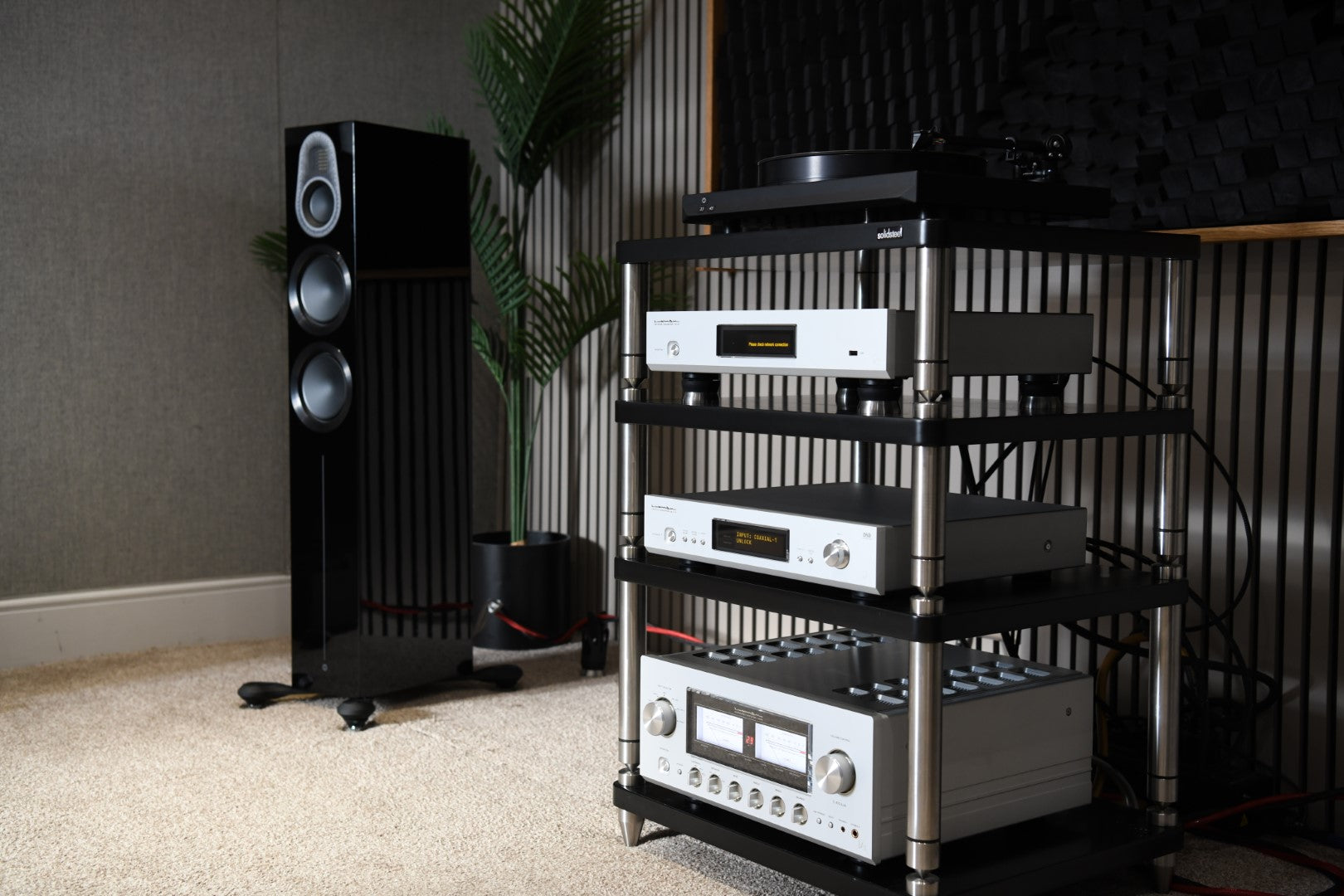
Keep any lighting close to the screen warm, low-output and controllable. Bright blue LEDs from equipment racks, chargers and network hardware are surprisingly distracting in a dark scene. Ideally, equipment lives in a ventilated cupboard, adjacent rack or purpose-built cabinet outside the main viewing area.

9. Keep control simple for everyone
The best cinema systems disappear when the film starts. A single handset, wall keypad or tablet interface should make it easy to turn everything on, select a source, lower the lights and begin watching. If every viewing session involves multiple remotes and a sequence of unexplained settings, the system will not be enjoyed as often as it should be.
Think beyond the cinema kit. Integrating heating, blinds and lighting scenes can transform the experience: press ‘Cinema’, the blackout closes, lights fade, projector starts and the system selects the right input. There is sophistication behind that simplicity, but it should feel effortless to use.
10. Build in comfort, ventilation and future flexibility
Deep cinema seats are appealing, but do not let furniture dictate an uncomfortable viewing distance or block speaker locations. Try seating in person where possible. Supportive headrests, sensible arm width and access between rows matter more after a three-hour film than they do in a showroom.
Ventilation is equally easy to underestimate. Projectors, AV amplifiers and multiple people generate heat, especially in a sealed, acoustically treated room. Quiet ventilation and adequate rack cooling protect equipment and keep the space comfortable without adding a distracting hum.
Finally, leave spare conduit and capacity in the rack. Streaming hardware, gaming consoles and video formats change. Good infrastructure allows a future upgrade without opening finished walls. At Yorkshire AV, a demonstration can be useful not simply for comparing equipment, but for hearing how speaker voicing, processing and room treatment work together before committing to a design.
The most rewarding cinema rooms are not defined by the longest specification sheet. They are the rooms where the lights fall, the first note of a score fills the space, and everyone forgets about the technology long enough to be completely absorbed in the film.


Share:
Transmission Line vs Bass Reflex Speakers