
A music streamer can make the difference between treating digital music as background convenience and sitting down for a proper listening session. The right one brings the weight of a double bass, the space around a vocal and the sudden dynamic lift of a favourite track into clearer focus. This music streamer buying guide looks beyond headline specifications to the choices that determine how a streamer will work in your system and in your home.
Start with the system, not the streaming service
It is tempting to begin with Spotify, TIDAL, Qobuz or Apple Music compatibility. Those services matter, but they are only one part of the decision. A streamer is a source component: it needs to suit your amplifier, loudspeakers, room and listening habits.
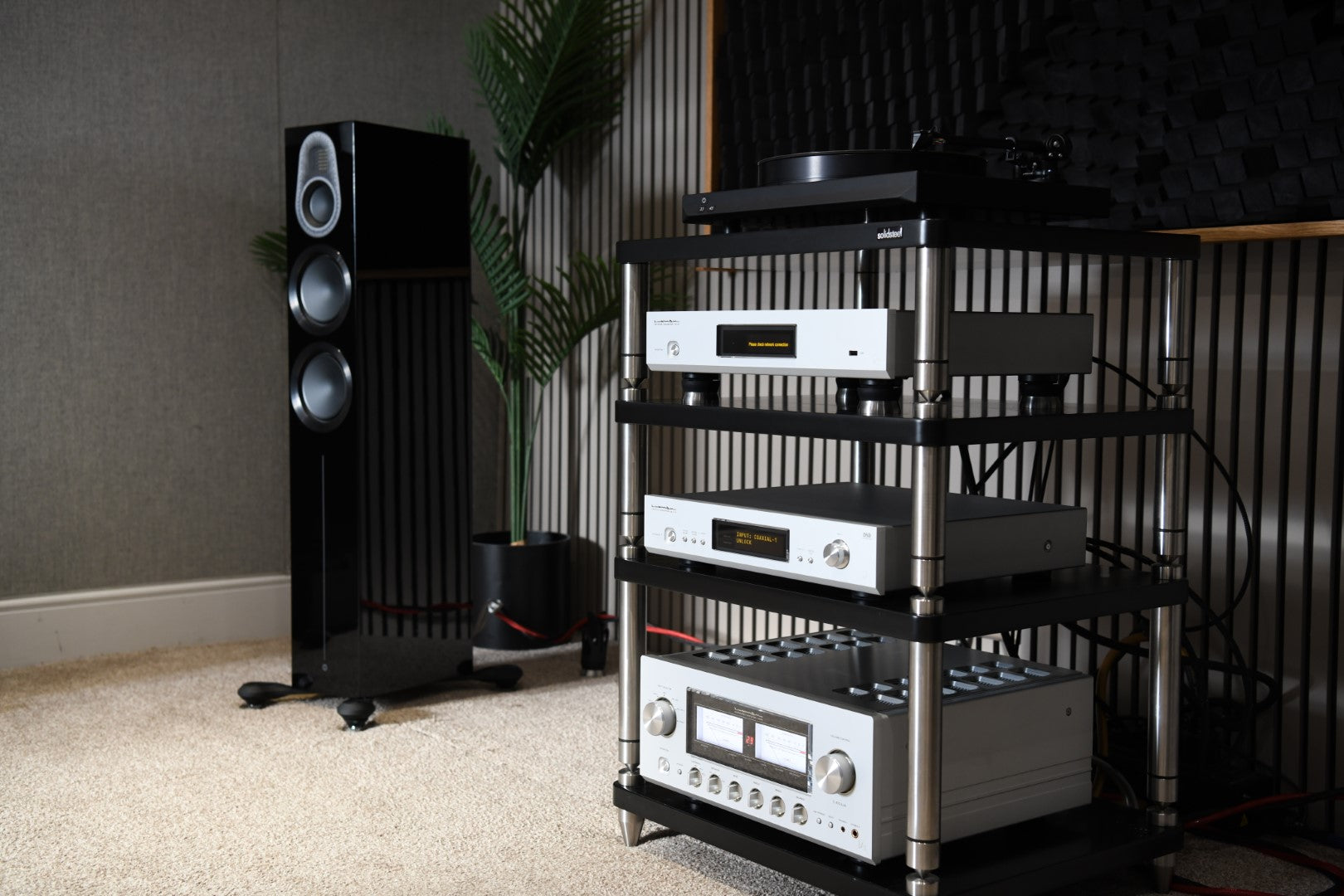
If your amplifier has excellent analogue inputs but no digital section, a streamer with a built-in DAC is the straightforward answer. It receives music from your network, converts the digital signal to analogue and connects directly to the amplifier. This can be a wonderfully tidy route for a traditional integrated amplifier, and many premium streamers offer genuinely accomplished DAC stages.
If you already own a high-quality standalone DAC or a modern amplifier with a digital input section you enjoy, consider a transport-only streamer. Its role is to deliver a clean digital signal to your existing DAC through USB, coaxial or optical connection. This approach can offer exceptional performance, but it adds another box and another cable. It makes most sense when the DAC is a known strength of your system rather than simply an unused input.
There is also the all-in-one network amplifier. Combining streaming, DAC and amplification in one chassis, it can be ideal for a living room where fewer boxes are preferable. The compromise is upgrade flexibility. Separate components usually make it easier to refine one part of the system later, while an all-in-one solution wins on simplicity and visual calm.
Music streamer buying guide: choose the control experience
You will use the control app far more often than you will look at the product specification. A superbly engineered streamer with a frustrating app soon becomes a source of irritation, especially in a household where several people want to choose music.
Look for native support for the services you use, clear search and library functions, reliable multi-room control if required, and a responsive interface. Roon Ready certification may be valuable if you want deep library management across local files and streaming services. Roon is particularly appealing to collectors with extensive downloaded music, detailed metadata and multiple listening zones, though it requires a subscription and a compatible Roon Core.
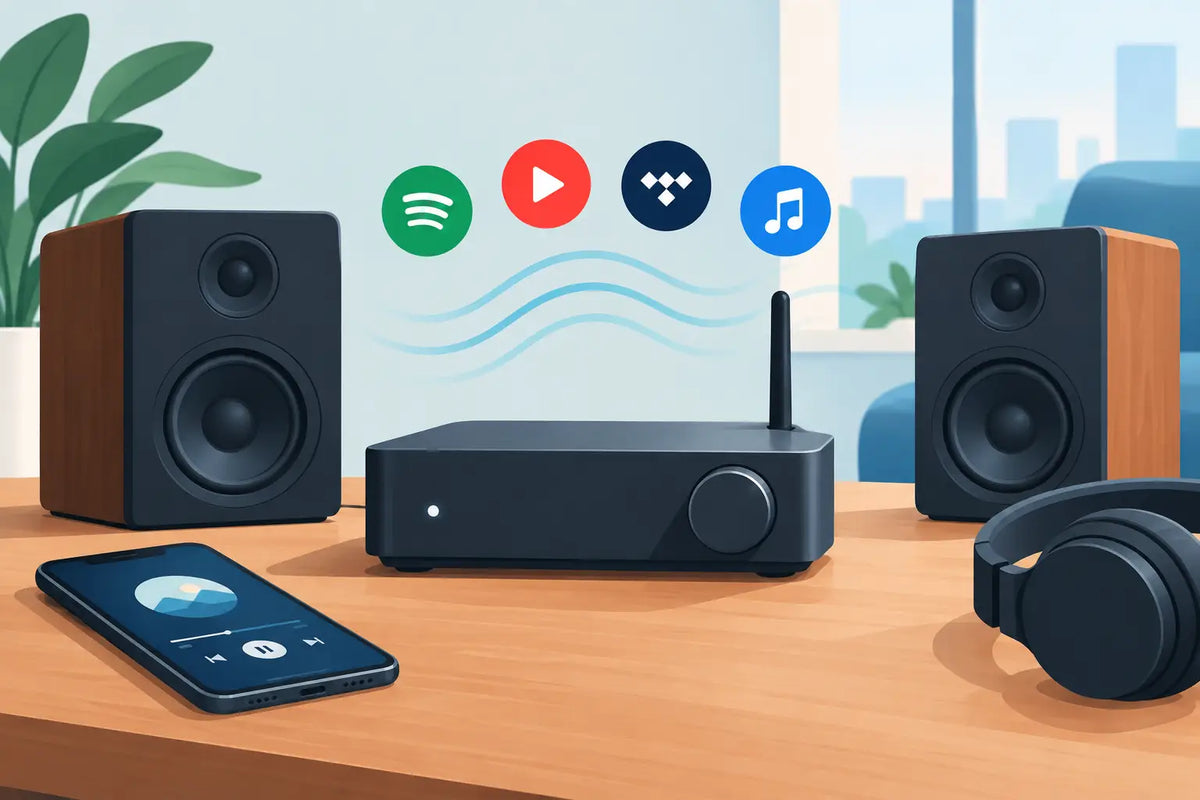
Apple users may prioritise AirPlay 2, while Spotify Connect offers a familiar and reliable route for many households. TIDAL Connect and Qobuz integration allow compatible streamers to play directly from the service rather than relying solely on a phone or tablet as an intermediary. That direct connection can be more stable and leaves your device free for calls, browsing or charging.
Do not dismiss the value of a proper remote control or front-panel display. An app is excellent for finding new music, but a display that shows album artwork and track information makes a streamer feel more like a component to live with. For some listeners, especially in a dedicated listening room, that tactile interaction is part of the pleasure.
Wired network or Wi-Fi?
A wired Ethernet connection remains the preferred option where practical. It is generally more stable, avoids competing with other wireless devices and provides useful reassurance when streaming high-resolution files or operating several zones at once. If the equipment position is close to your router or a network switch, use Ethernet.
That said, good Wi-Fi is not inherently second-rate. Many current streamers have capable wireless hardware, and a well-planned mesh network can provide dependable coverage throughout a larger home. Wi-Fi is often the sensible choice where running cable would involve disruptive work or compromise the room. The key is network quality, not simply the presence of a wireless symbol on the product carton.
For renovation projects, it is worth planning wired data points alongside speaker cable, power and television connections. A small amount of forethought behind walls or within cabinetry can make a system more reliable and discreet for years to come.
High-resolution audio matters, but not in isolation
Most premium streamers support high-resolution PCM files and many handle DSD as well. These formats can be worthwhile, particularly when the recording and mastering are first-rate. Yet format support alone does not guarantee a more involving sound. A beautifully recorded CD-quality album can be more compelling than a poorly mastered high-resolution release.
Focus on the complete engineering picture: power supply quality, clocking, isolation from electrical noise, DAC implementation and analogue output stage all influence the final result. Two products may share similar streaming credentials on paper yet present music with notably different scale, timing, tonal colour and refinement.
This is where an audition becomes valuable. One streamer may suit a system that needs more openness and delicacy; another may bring welcome body and drive to leaner-sounding loudspeakers. There is no universal winner, only a more convincing match.
Connections that protect your options
Check the connections before falling for a feature list. At minimum, a conventional system usually benefits from analogue RCA outputs and Ethernet. Balanced XLR outputs can be worthwhile when your amplifier supports them, particularly in systems using longer interconnects or where maximum noise rejection is desirable.
Digital outputs are useful if you may add an external DAC later. USB often supports the widest range of formats, while coaxial and optical connections remain practical and widely compatible. A USB input can also allow connection of a computer or storage device, although a dedicated NAS drive on the home network is often the neater solution for larger music libraries.
If television sound is part of the brief, HDMI ARC can be transformative. It lets a compatible streamer or network amplifier receive audio from the TV using the television remote for everyday volume control. For a lounge system used equally for films, sport and music, this small convenience often has more real-world value than an exotic file-format capability.
Trigger outputs, fixed and variable analogue outputs, headphone connections and subwoofer integration may also matter. Variable output permits a streamer to drive a power amplifier or active loudspeakers directly, reducing box count. It is elegant, but ensure the streamer’s volume control and analogue stage are good enough to justify removing a pre-amplifier.
Match the streamer to your listening priorities
A compact entry-level streamer can be an enormous improvement over Bluetooth, giving better app control, direct streaming and a cleaner connection into a hi-fi system. Spending more should bring meaningful gains rather than simply a more elaborate casework finish.
At the middle and upper end, expect stronger power supplies, more sophisticated digital architecture, superior components and a more revealing analogue stage. These upgrades are most audible when the rest of the system is capable of showing them. Pairing a reference-grade streamer with modest loudspeakers in an untreated, echoing room may not deliver the return you expect.
Think honestly about how you listen. If you want effortless access to playlists during breakfast and radio in the kitchen, usability and multi-room capability deserve priority. If you spend evenings exploring complete albums on a serious two-channel system, sound quality, DAC performance and careful system matching become more significant. Neither approach is less valid.
Do not overlook the room and installation
Digital convenience does not remove the fundamentals of hi-fi. Loudspeaker placement, room acoustics and sensible equipment support still shape what you hear. A streamer can reveal low-level detail and spatial information that poor positioning or reflective surfaces quickly obscure.
For an integrated installation, avoid placing network equipment and sensitive audio components in a cramped, unventilated cupboard. Allow for airflow, accessible cabling and a reliable network connection. If equipment must be hidden, plan control carefully, whether through app control, infrared repeaters or a wider home-automation system.
A proper demonstration is especially useful when comparing streamers with different sonic characters or deciding between separates and an all-in-one solution. At Yorkshire AV, listening in a system close to your own and discussing the room, existing components and future plans can turn a confusing shortlist into a confident choice.
The best streamer is not the one with the longest specification sheet. It is the one that makes choosing music effortless, fits naturally into your system and keeps you returning for one more album when you should probably have gone to bed.

Share:
What Is a Phono Stage? The Vinyl Signal Explained
Do I Need a DAC? A Clear Guide to Better Sound