
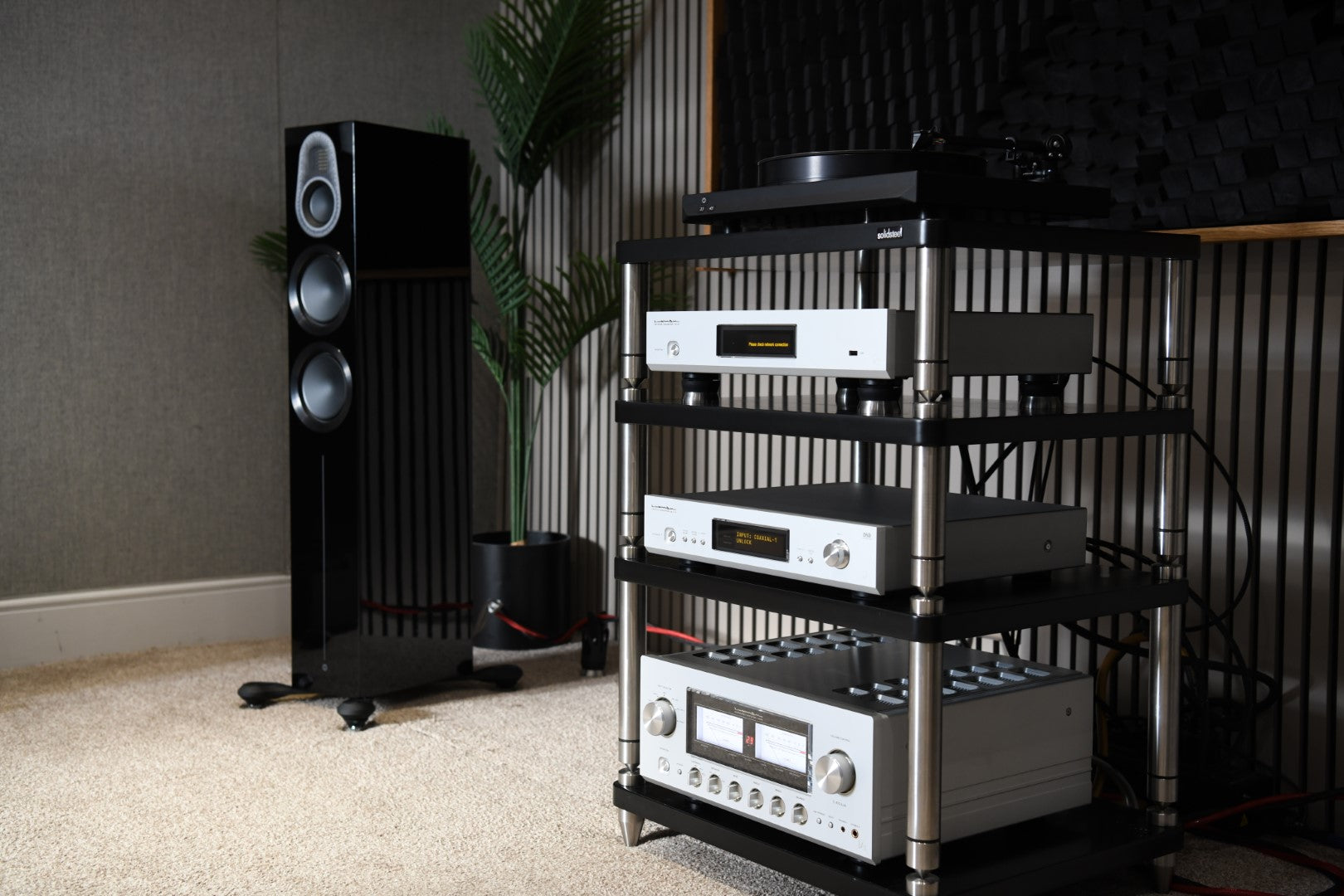
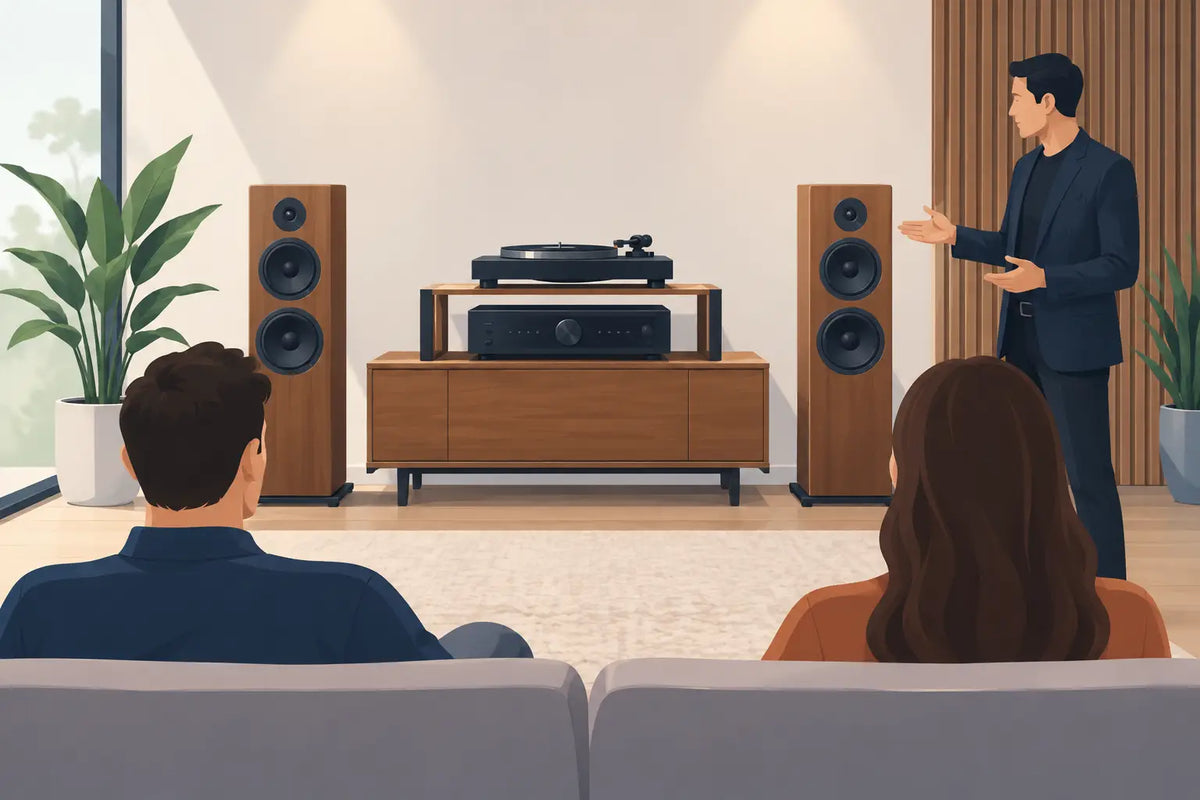
A hi-fi system demonstration should answer a far more useful question than, “Which product has the biggest specification?” It should show you what happens when the right loudspeakers, amplification and source components work together in a properly considered room. The result is not merely more volume or extra detail. It is a clearer connection to a favourite recording, a bassline that has shape rather than boom, and the sense that a vocalist has stepped into the room.
For a significant investment, hearing a system before buying is sensible. Yet a good demonstration is not a sales pitch with a playlist attached. It is a chance to establish what you value, understand the compromises involved and hear how different approaches suit your music, room and daily life.
Why a hi-fi system demonstration matters
Hi-fi components do not perform in isolation. A pair of loudspeakers may be excellent, but their character changes with the amplifier driving them, the distance from the rear wall, the furnishings in the room and the quality of the source. A turntable, streamer or DAC can reveal greater texture and timing, but only when the rest of the system is capable of showing it.
That is why comparing specifications online can only take you so far. Power ratings, driver sizes and supported file formats are useful starting points, but they cannot tell you whether a system makes you want to play another album. A demonstration turns technical choices into an experience you can judge for yourself.
It also helps avoid a common mistake: spending heavily on one component while overlooking system balance. An impressive amplifier paired with unsuitable speakers, or capable speakers positioned poorly, can leave a system sounding less involving than a more thoughtfully matched alternative. The best route is rarely the most expensive box. It is the combination that works as a whole.
Before you arrive: start with how you listen
There is no need to arrive with a detailed shortlist or a head full of measurements. Knowing how you use music at home is often more valuable. Do you sit down for full albums, play vinyl at weekends, stream throughout the day, or want one system that handles television as confidently as it handles music? Are you furnishing a dedicated listening room, an open-plan kitchen-living space or a family lounge where the equipment needs to look as good as it sounds?
Be candid about the room, too. Approximate dimensions, ceiling height, floor type and likely speaker positions are all helpful. Large floorstanders can create remarkable scale, but a compact standmount may be the better choice near boundaries or in a smaller room. Likewise, an all-in-one streaming amplifier can bring welcome simplicity, while separate components offer more flexibility and upgrade potential over time. Neither answer is automatically superior.
Bring a few familiar tracks if possible. Choose recordings you know well, ideally in the format you use most. A favourite LP, CD or playlist is useful because you already understand its vocal tone, rhythm and production. Include varied material: an intimate voice, acoustic instruments, a busy rock or electronic track, and something with deep bass or wide dynamics. The aim is not to find the most polished audiophile recording. It is to hear whether your own music becomes more convincing.
What a good demonstration should feel like
A well-run session begins with a conversation, not a switch-on. The adviser should establish your budget range, room constraints, current equipment and the qualities you want more of. Some listeners prioritise a large, room-filling presentation. Others want pin-point imaging, natural vocal timbre, low-level detail or the physical impact of live drums. These preferences shape the system selection.
At Yorkshire AV, demonstrations can be arranged across dedicated listening rooms, allowing equipment to be heard in conditions that make meaningful comparison possible. That matters because casual showroom listening can be misleading if levels are not matched, speaker placement is rushed or too many variables change at once.
Expect to hear two or three carefully chosen systems rather than an exhausting parade of products. When comparing amplifiers, for example, keep the source and loudspeakers constant. When evaluating speakers, use familiar electronics where possible. Changing every component between tracks makes it difficult to identify what you are actually hearing.
Volume matching is especially important. The louder system will often sound more exciting at first, even when it is not more accurate or controlled. A considered demonstration keeps levels comparable so you can listen beyond the initial impact.
Listen beyond the obvious detail
The first moments may bring a rush of treble sparkle, deeper bass or a wider soundstage. Enjoy that, but give each system time. The qualities that matter over years of ownership are often subtler: whether the sound remains composed when a track becomes dense, whether bass notes start and stop cleanly, whether voices sound natural, and whether you can follow individual instruments without strain.
Pay attention to scale as well as precision. A convincing system does not place every musician in an exaggerated spotlight. It presents the performance as a coherent event, with rhythm, dynamics and tonal colour working together. If you find yourself analysing the equipment more than enjoying the song, ask to replay the track or try another system.
Ask for practical comparisons
A demonstration is the right place for direct questions. Would an integrated amplifier be enough, or does your room and speaker choice justify separate power amplification? Does a streamer’s control app suit everyone in the household? Will a turntable need a phono stage? Is a subwoofer worthwhile for music, home cinema or both?
There are trade-offs. A slim, elegant speaker may fit beautifully into a living room but not deliver the same effortless low-frequency authority as a larger cabinet. A high-resolution streamer may offer exceptional convenience, while a dedicated CD transport or turntable can make physical media more rewarding. The best advice acknowledges those differences rather than insisting there is one correct answer.
Room acoustics are part of the system
Even exceptional equipment cannot ignore the room. Hard floors, large glazed areas and bare walls can make treble feel too prominent, while corner placement can exaggerate bass. This is not a reason to fill your home with studio treatment. It is a reason to plan intelligently.
During a demonstration, ask how the proposed speakers are likely to behave in your space. Small changes in position can be transformative: moving speakers away from a rear wall, adjusting toe-in, altering the listening seat or placing a rug between speakers and sofa. For more ambitious projects, acoustic panels, fabric walls and professional calibration can deliver gains that no simple component swap will match.
This becomes even more relevant when music and cinema share the same room. An AV processor, carefully installed speakers and audio calibration can create a deeply immersive film experience without sacrificing stereo enjoyment. The approach depends on whether the room is dedicated to entertainment or needs to remain a relaxed, flexible family space.
Leave with a plan, not pressure
The value of a hi-fi system demonstration continues after the final track. You should leave with a clear picture of the system that suited you, what it costs, where it can be sensibly improved later and how it will be installed. If you are replacing existing equipment, discuss part-exchange possibilities and whether any retained component could become the weak link.
For systems beyond a straightforward shelf or rack installation, delivery and set-up deserve proper consideration. Speaker positioning, turntable levelling, network configuration and calibration are not glamorous details, but they protect the performance you heard in the showroom. A system that arrives in boxes and is hurriedly connected may not reveal its potential.
Most of all, trust your reaction. Technical guidance and careful comparisons are invaluable, but your system should make you look forward to putting music on. Bring the tracks that matter, ask the awkward questions, and give your ears enough time to choose with confidence.
Share:
In Ceiling Speaker Installation Done Properly